
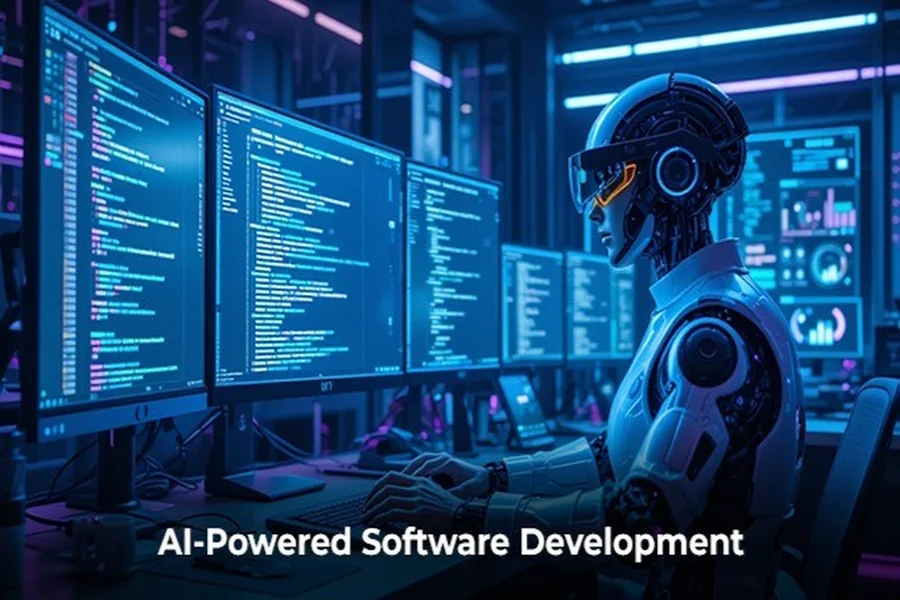
Software development has changed a lot over the years, and testing and automation have changed with it. In the early days, most testing work was manual. It took time, required repeated effort, and often slowed down releases. As applications became larger and release cycles became shorter, these limits became more visible. Teams needed quicker feedback and better ways to handle repeated testing tasks.
This need pushed automation forward, and artificial intelligence added a new layer to it. AI-powered automation goes beyond fixed rules and basic scripts. It studies data, recognises patterns, and reacts to changes during development. As AI becomes part of coding, testing, and project planning, it is shaping how teams build and maintain software. This article explores what AI automation means, the technologies behind it, the benefits it brings to test automation, and how it may shape the future of software development.
Overview Of Artificial Intelligence (AI) Automation
AI automation uses artificial intelligence technologies such as machine learning and natural language processing to perform tasks that normally require human judgment. Unlike traditional automation, AI systems can work with unstructured data, adapt to new information, and improve their behaviour over time based on learning.
These systems do not just follow fixed rules. They analyse patterns, interpret context, and make decisions that adjust as conditions change. This makes AI automation suitable for complex scenarios where inputs are unpredictable or continuously evolving.
Key Technologies Behind AI Automation-
- Machine Learning: Machine learning algorithms study data patterns and learn from past outcomes. As more data becomes available, these models refine their predictions and decisions, making systems more accurate and adaptable.
- Natural Language Processing: NLP allows systems to understand, interpret, and respond to human language. It supports applications such as chatbots, voice assistants, and automated text analysis by enabling more natural interactions.
- Computer Vision: Computer vision helps AI systems analyse and interpret visual data. It is used in tasks such as image recognition, quality checks, object detection, and facial recognition.
- Predictive Analytics: Predictive analytics uses historical data to forecast future outcomes. These models support planning, decision-making, and risk assessment by identifying trends and potential results before they occur.
AI’s Effect on the Software Development Lifecycle (SDLC)
Artificial intelligence is reshaping the SDLC by automating workflows, shortening development timelines, improving code quality, and managing costs more effectively. Its growing role enhances productivity and supports better efficiency across each phase. Below is how AI is transforming the SDLC across stages.
Requirement gathering and analysis
Gen AI translates high-level ideas into structured requirements by processing natural language inputs. It analyzes business goals and user needs, forecasts possible requirements, and highlights gaps early. This approach streamlines early discussions and improves clarity while reducing errors.
Design and planning
Generative AI enhances design and planning by recommending suitable architectures, UI UX structures, and system layouts based on constraints. It creates mockups, diagrams, and technical specifications, which reduces manual work and improves consistency. Teams reuse solution designs across projects, which strengthens harmony and supports more reliable outcomes.
Development
Gen AI supports developers through automated code generation and handling repetitive coding tasks. Real-time suggestions and intelligent autocompletion improve accuracy and speed, while developers focus on complex logic and problem-solving where human judgment matters most.
Testing
AI-driven testing automates test case creation and execution by analyzing code paths and risk areas. It improves coverage, detects defects earlier, and reduces manual effort. This results in improved software quality and more effective testing cycles.
Deployment
Generative AI improves CI CD pipelines by predicting failures and recommending changes for smoother releases. It supports faster builds and reduced downtime. Engineers use AI to activate technical environments, whether cloud-based or on premises, and manage deployments across stages and approval gates, strengthening transitions across the lifecycle.
Maintenance and support
After deployment, gen AI identifies opportunities for refactoring and optimization. It monitors system behavior, detects anomalies, and forecasts potential issues. This approach improves stability and reduces resolution time during incidents.
Documentation
AI supports the creation of documentation and handles regular updates. This includes API references and code explanations. Documentation stays current and accurate. Development teams spend less time on manual documentation work.
Feedback and continuous improvement
AI analyzes user behavior and performance data to recommend refinements for future releases. These insights help teams pick enhancements that deliver the most value, supporting continuous improvement across the evolving software landscape.
Benefits of AI-Powered Automation
Here are some detailed benefits of incorporating AI:
- Visual AI Verification. With AI, teams can recognize visual patterns and images that help detect UI issues in applications through visual testing, which ensures that all visual elements work as expected across screens and updates.
- Up-to-date tests. As an application evolves, changes happen frequently. Test cases must evolve as well. Instead of spending hours fixing broken test scripts, artificial intelligence allows tests to adjust automatically to the latest version of the application.
- Improved Accuracy and Coverage. By analyzing large volumes of data, AI identifies patterns and highlights areas that need deeper testing. It also measures test coverage across the application and reduces the risk of bugs reaching production.
- Automation of Repetitive Tasks. Artificial intelligence helps automate repetitive testing tasks and lets teams focus on activities that need human judgment, such as exploratory testing and edge case analysis.
- Faster Execution of Tests. With AI in software testing, tests can run continuously, which results in faster feedback cycles and supports quicker development progress.
- Reduced Human Error. Manual testing can lead to missed steps and small mistakes. AI reduces this risk by performing the same tasks consistently, which helps catch issues caused by overlooked details.
Future of AI-Powered Automation in Software Development
AI-powered automation is shaping how software development will progress in the coming years. Rather than functioning as a separate layer, AI is becoming part of everyday development activities and supporting teams across multiple stages of the lifecycle.
Shift in Developer Responsibilities
As automation handles repetitive and time-consuming tasks, developers will focus more on system design, architecture decisions, and complex logic. AI will assist by analysing data and suggesting actions, but final decisions will remain with engineers. This shift changes how developers spend their time without removing their core responsibility.
Smarter Code Generation
AI-generated code has grown more advanced over the past year. These systems can now handle complex logic and detailed requirements. In the coming years, AI is expected to create full features based on high-level instructions, which will reduce routine coding work for developers.
AI-Driven Project Management
AI tools are starting to support project management work beyond writing code. These systems assist with risk tracking, resource planning, task scheduling, and progress updates. This helps teams plan better and respond quickly when priorities change.
More Autonomous Testing
Software testing tools are becoming more independent over time. These tools can create tests, run them, and review the results. They can also identify the root cause of failures. This reduces manual review and supports faster feedback during development.
Explainable AI for Compliance
Understanding how AI reaches a decision is becoming more important. Explainable AI systems can describe why a certain action or suggestion was made. This builds trust and supports compliance needs, especially in regulated industries.
AI-Based Security Checks
Security checks are no longer limited to the final stage of development. AI-driven security systems are being added at every stage of the software lifecycle. This helps teams detect risks early and maintain safer applications.
AI as a Development Partner
In the future, AI could act as a true partner rather than just a tool. It may take part in design discussions, suggest architecture changes, and contribute large sections of code with minimal guidance.
Self-Adapting Software
AI systems that learn from usage and feedback may support software that fixes issues on its own. These systems could handle bugs, performance issues, and even adjust features based on user behavior or system conditions.
Wider Access to Software Creation
AI continues to lower the entry barrier for building software. More people can turn ideas into working products without great technical skills. This shift supports creativity and opens the door for new types of applications and solutions.
Challenges of AI in Software Development
While AI brings many benefits to software development and testing, it also comes with several challenges that teams need to think about.
- Data Quality: AI systems depend on large amounts of good-quality data to learn and make accurate predictions. In real projects, data can be incomplete, biased, or contain errors. Poor data can lead to wrong results and weak outcomes, which affect trust in the system.
- Bias in AI models: When training data contains bias, AI systems can reflect or even strengthen those biases in their outputs. This can result in unfair outcomes, especially in software that handles user decisions, recommendations, or automated actions.
- Over-Reliance on Automation: AI can take over many repetitive tasks, but too much dependence on automation can be risky. Reduced human review can weaken judgment and lower skill levels over time. A balance between automated systems and human decision-making is important.
- Security and Privacy: AI systems can become targets for cyber attacks and data leaks. Sensitive code and information may be exposed if security is weak. Strong protection practices are needed to keep data and systems safe.
- Explainability: Many AI models work like black boxes, which means their decisions are hard to understand. This can be a serious issue in areas such as healthcare or aviation, where safety and accountability matter a lot.
- Integration Complexity: Many teams are still adjusting to adding AI tools into existing workflows. Older systems and fixed processes can make adoption difficult. This transition phase often needs time, planning, and changes in team practices.
Along with workflow challenges, testing AI-driven applications across multiple browsers, devices, and environments adds another layer of complexity.
Setting up and maintaining this infrastructure in-house often slows teams down and increases maintenance effort, especially when teams are figuring out how to test AI agents whose behaviour may vary based on inputs and real-time data.
Platforms like TestMu AI help address this gap by offering a cloud-based testing environment that supports AI automation at scale.
TestMu AI lets teams run automated tests across 3000+ real browsers, devices, and operating systems without managing physical labs. With parallel execution, framework integrations, and stable test environments, teams can focus more on validating AI behaviour and less on infrastructure management.
Conclusion
AI-driven test automation is becoming the future of software testing. By reducing manual effort and lowering the chance of human mistakes, teams can release software at a quicker pace without losing quality.
AI systems learn from new data over time and adjust to changes in the application or testing needs. They use past results and real-time feedback to refine testing approaches and make testing more consistent. This supports continuous progress across the software development lifecycle. When used with clear planning and human oversight, AI-powered automation can support stronger testing practices and better software quality in the long run.
