
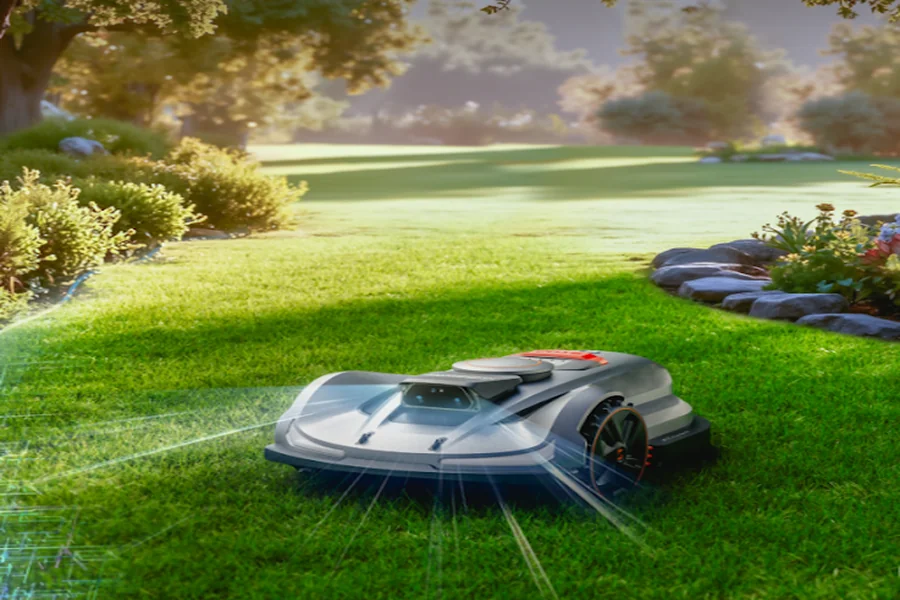
Robotic mowers now do far more than drive in simple straight lines across open lawns. Modern models handle tricky spaces, winding paths, and gardens broken up by patios, trees, and flowerbeds. Their software and sensors work together to create predictable mowing patterns, even when the layout looks chaotic. Homeowners who once dismissed them as “only for square lawns” now use them on sloped areas, split levels, and narrow side strips. The key lies in correct setup, smart navigation features, and choosing a machine that matches the size and complexity of the garden. With a little planning, many complex layouts can be managed reliably by a robotic mower.
Can robotic mowers handle complex garden layouts?
How navigation systems manage multiple zones and paths
Robotic mowers manage complex gardens by dividing them into zones and creating clear routes between them. You set up these working areas with boundary wires or, on some higher-end models, through a smartphone app and GPS. The mower follows guide wires or virtual paths from the charging station to each zone, then switches to a mowing pattern designed for full coverage. Many robots use randomized or semi-random patterns, but smarter units add systematic lines or adaptive algorithms to cover every corner. Timers and schedules let you assign different mowing times to different zones, which helps when some areas grow faster than others. When the battery runs low, the mower returns to its base along the same predefined paths.
Handling narrow passages and irregular lawn shapes
Narrow passages and awkward shapes challenge old-style robots, but newer mowers use better software and sensors to cope. Many models include a “corridor” or “passage” mode that adjusts their path when the boundary wires run close together. The mower slows slightly, changes direction more often, and avoids getting stuck in tight gaps. On irregular lawns with curves and cut‑outs around patios or beds, the boundary wire defines clean edges, so the robot knows exactly where to stop. Over several days, overlapping paths even out any missed strips. Correct wire placement and testing passes in tricky spots are essential for reliable performance.
What features help robotic mowers navigate efficiently?
Smart mapping, GPS, and boundary wire systems
Modern robotic mowers rely on a mix of mapping tools to navigate efficiently. Many entry and mid-range models still use boundary wires and guide wires to mark the lawn and lead the mower between zones. Installation takes time, but the wires create clear, reliable limits. More advanced models add GPS and on‑board mapping. These robots learn the lawn shape and store a virtual map, which lets them plan more systematic mowing patterns. Some use RTK‑GPS or similar tech for higher precision on large, open sites. A few premium mowers skip perimeter wires altogether and use app‑defined virtual boundaries, which makes them easier to adjust when the garden changes.
Obstacle detection and avoidance technologies
Obstacle detection sits at the heart of reliable robotic mowing in busy gardens. Basic machines use contact sensors in the shell: when they bump into an object, they stop and turn away. More advanced models add ultrasonic sensors, radar, or cameras to “see” obstacles before hitting them. This helps them steer around trees, furniture, and toys smoothly. Some robots recognize specific shapes, such as pets or people, and reduce speed or stop for safety. Lift and tilt sensors shut the blades off if someone picks up the mower. Together, these technologies reduce damage, improve coverage, and make the mower safer to use.
Multi-zone management and route optimization
Multi-zone management allows a single robotic mower to handle separated areas of lawn, such as front and rear gardens divided by a path or driveway. You can define each zone with wires or app settings and assign mowing schedules to match grass growth and use. Route optimization then determines how the mower travels between them. Some units follow dedicated guide wires, while others use their internal map to find efficient paths. Over time, adaptive software learns which routes work best and reduces needless travel. This cuts energy use, limits wheel marks, and helps the mower spend more time cutting grass and less time moving between areas.

How can you optimize your garden for better navigation?
Setting up boundaries and guide wires correctly
Accurate boundary and guide wire setup makes the biggest difference to performance in complex gardens. Place the boundary wire around the entire working area, keeping a consistent distance from edges like walls, fences, and flowerbeds. Follow the manufacturer’s recommended spacing from paths, ponds, and steep drops. Use the guide wire to create a clear route from the charging station to remote zones or narrow sections. Avoid sharp corners; smooth curves help the mower follow the wire without stopping or turning awkwardly. Secure the wire firmly so it does not lift as the grass grows. After installation, run several test cycles and adjust the wires wherever the mower struggles.
Reducing obstacles and improving lawn accessibility
Even the smartest robotic mower performs better when the garden layout supports easy movement. Remove loose items such as toys, hoses, and tools from the lawn before mowing. Where possible, group pots, furniture, and decorations on patios rather than grass. Use edging or low borders to separate flowerbeds from the lawn and minimize spots where the mower’s wheels might sink. If the garden has very tight corners, consider rounding them with planting or paving. Small ramps can smooth level changes between lawn areas. By simplifying the paths and reducing clutter, you help the robot maintain a consistent cutting pattern and avoid repeated stops.
Choosing the right model for complex layouts
Selecting a mower that matches your lawn’s complexity is crucial. For gardens with many narrow passages, look for models with corridor modes and strong navigation software. If you have several separated zones, choose a mower with true multi-zone programming and, ideally, guide wires or virtual zones. Large, open lawns benefit from GPS‑assisted mapping and route optimization, while smaller, intricate spaces may need precise boundary control and sensitive sensors. Check the maximum working area, slope capability, and cutting width against your garden’s size and terrain. Reading user reviews from owners with similar layouts can reveal how each model performs in real‑world complex gardens.
Conclusion
Robotic mowers can indeed handle complex garden layouts when their navigation tools and your setup work together. Boundary wires, guide wires, and GPS‑based mapping help them move between zones and cover every part of the lawn. Obstacle detection and multi‑zone management let them work around trees, patios, and paths without constant supervision. However, the garden still needs some preparation: clear routes, sensible edges, and stable surfaces make a big difference. Matching mower features to your Sunseeker elite lawn’s shape, size, and slopes ensures you do not push the machine beyond its limits. With thoughtful planning and the right model, a robotic mower can keep even a challenging garden neatly trimmed throughout the growing season.
