
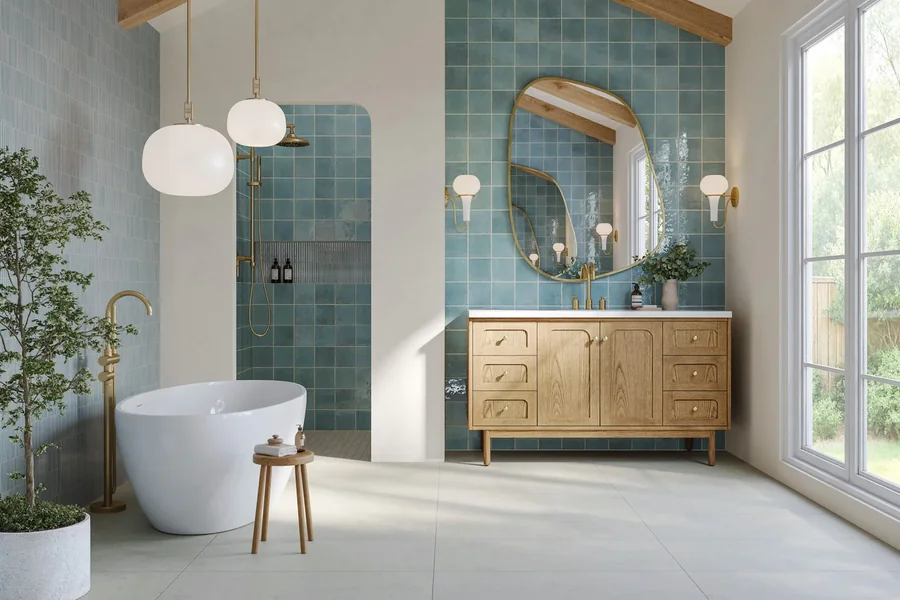
Creating a bathroom that is both functional and aesthetically pleasing can seem daunting, but with careful planning and thoughtful choices, it’s entirely achievable. The key elements that define a bathroom’s style and usability are its tiles, fixtures, and lighting. Each of these components contributes to the overall atmosphere, from creating a relaxing spa-like retreat to ensuring practical everyday use. Here’s a detailed guide on how to choose the perfect tiles, fixtures, and lighting for your bathroom.
1. Choosing the Right Bathroom Tiles
Tiles are more than just a practical choice for moisture-prone areas—they set the tone for your bathroom’s style. The selection process involves considering size, material, color, texture, and layout.
- Materials
Bathroom tiles come in a variety of materials, each with unique benefits:
- Ceramic: Durable, water-resistant, and available in a wide range of colors and patterns. Ideal for walls and floors.
- Porcelain: Denser and less porous than ceramic, making it highly resistant to moisture and stains. Suitable for high-traffic areas.
- Natural Stone: Options like marble, travertine, and slate offer a luxurious, organic look. Stone requires more maintenance and sealing but adds timeless elegance.
- Glass: Adds brightness and reflection to small bathrooms. Perfect for accent walls or backsplashes but can be slippery if used on floors.
- Size and Shape
Tile size can dramatically impact the perception of space. Large-format tiles create a sense of openness, minimizing grout lines and making the bathroom feel larger. Smaller tiles, such as mosaics, are great for shower floors, backsplashes, or creating intricate patterns. Rectangular subway tiles are classic, while hexagonal or patterned tiles can give a modern or playful touch. - Color and Finish
Lighter colors tend to make a space feel bigger and more open, while darker shades add drama and sophistication. Matte finishes provide a subtle, contemporary look and are less slippery, whereas glossy finishes reflect light and add a polished feel. Mixing textures and finishes can create visual interest, but avoid overcomplicating the palette to prevent a cluttered appearance. - Layout and Patterns
The arrangement of tiles can also affect the overall aesthetic. Classic grids, herringbone, chevron, or diagonal layouts each create a distinct style. Consider vertical patterns to add height to the room or horizontal patterns to make it appear wider. Don’t forget to coordinate grout color—it can either blend seamlessly or contrast boldly to accentuate the pattern.
2. Selecting the Right Fixtures
Bathroom fixtures are crucial for both function and design. Faucets, showerheads, sinks, toilets, and bathtubs not only need to work well but also complement the style of your space.
- Style and Finish
Fixtures come in a variety of finishes: chrome, brushed nickel, matte black, gold, or bronze. Chrome and nickel are classic and versatile, black adds a modern, bold statement, and gold or brass introduces warmth and luxury. The style of fixtures should match the overall design theme—contemporary, traditional, rustic, or industrial. - Functionality
Consider how you use the space:
- Faucets: Single-handle faucets are simple and space-saving, while dual handles give a more traditional look.
- Showerheads: Rainfall showerheads provide a spa-like experience, whereas multi-function models offer versatility. Handheld showers are practical for cleaning and bathing children or pets.
- Sinks and Vanities: Vessel sinks sit on top of the countertop for a dramatic effect, while under-mount sinks are sleek and easy to clean. Vanity size should provide enough storage while keeping the space uncluttered.
- Toilets: Consider water efficiency, comfort height, and design. Wall-mounted toilets save space and create a modern feel. For a high-tech upgrade, luxurious electronic bidet seats can enhance hygiene and comfort, making your daily routine feel indulgent.
- Quality and Durability
Investing in high-quality fixtures ensures long-term durability and fewer maintenance issues. Look for materials that resist corrosion and are easy to clean. High-end fixtures might cost more upfront but save money over time through longevity and reduced repairs.
3. Optimizing Bathroom Lighting
Lighting sets the mood, enhances functionality, and highlights design features. The right combination of task, ambient, and accent lighting can make even a small bathroom feel spacious and inviting.
- Ambient Lighting
This is the main light source for the bathroom, often from ceiling-mounted fixtures or recessed lights. Ambient lighting should be bright enough for general activities but soft enough to create a relaxing atmosphere. Consider dimmable options for flexibility. - Task Lighting
Task lighting is essential around mirrors and vanities for grooming, shaving, and applying makeup. Wall-mounted sconces or vertical light bars on either side of the mirror reduce shadows and provide even illumination. Avoid overhead-only lights above the mirror as they can cast unflattering shadows on the face. - Accent Lighting
Accent lighting highlights architectural details, niches, or decorative tiles. LED strips under vanities, backlit mirrors, or recessed lights in shower areas can create a luxurious and visually appealing effect. - Color Temperature
Choose lighting with a color temperature between 2700K and 3500K for a warm, natural glow. Avoid overly cool or bluish lights, as they can make the space feel cold and uninviting. Layering different light sources helps balance brightness and shadows for a comfortable environment.
4. Bringing It All Together
Choosing tiles, fixtures, and lighting should not be done in isolation—they must work in harmony to achieve a cohesive look. Start with a style or color palette as your guide. For example, a minimalist bathroom might use large, neutral-toned tiles, sleek black fixtures, and understated LED lighting. A vintage-inspired bathroom could combine patterned tiles, brass fixtures, and soft, warm lighting.
Consider practical aspects like moisture resistance, maintenance, and ergonomics alongside aesthetic choices. Mock-ups or sample boards can help visualize combinations before committing to the final design. Visiting showrooms or consulting with a professional designer can also provide insights into the latest trends, materials, and technologies.
Finally, don’t overlook personal comfort. A beautiful bathroom is not just about appearance—it should be a space that feels inviting, functional, and relaxing every day.
Conclusion
Selecting the perfect tiles, fixtures, and lighting for your bathroom involves balancing style, functionality, and personal preference. By carefully considering materials, finishes, layout, and lighting, you can create a bathroom that is not only visually appealing but also practical and comfortable. With attention to detail and thoughtful planning, your bathroom can become a sanctuary—a space where beauty meets utility and every element works in harmony.
