
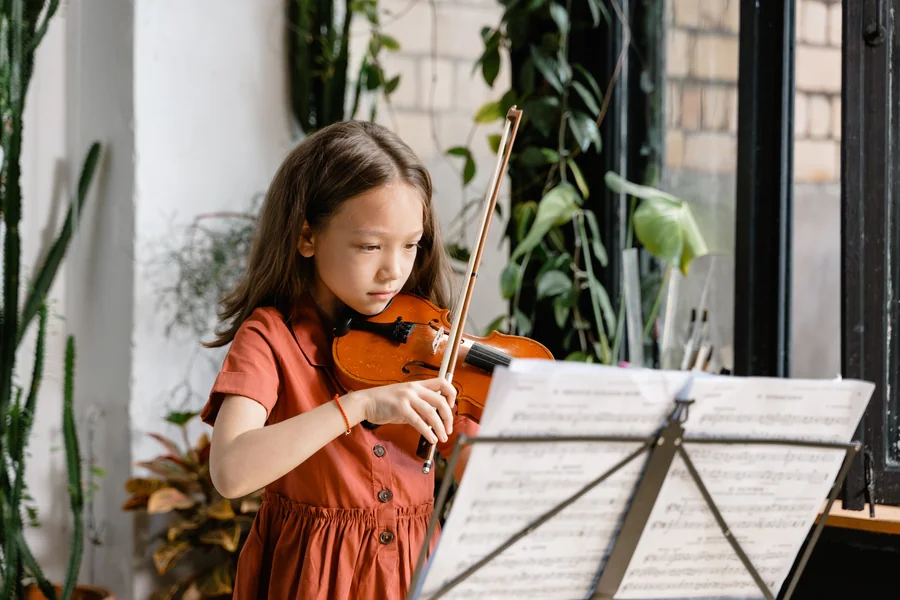
Learning to play a violin is not a simple process. The violin is one of the delicate string instruments that can be a bit intimidating to learn. You’ll need patience and lots of practice to build skills and confidence.
Are you a beginner? If yes, know that it’s more practical to start with an affordable violin. A reliable, cheap violin can give everything you need to begin learning without draining your wallet. What’s important is that you find an instrument that stays in tune, is comfortable to use, and has a decent sound.
Choosing a Cheap Violin
Before starting any lessons, you should have the correct violin size. There are different sizes, which can be tempting to just pick whatever is available. But here’s the thing. Younger ones usually need the smaller models for easy playing.
Also, you should keep an eye out for basic quality standards, such as stable tuning pegs, a fitted bridge, and quality strings. If your violin can’t meet these basic standards, expect that you won’t get a decent sound.
Beginner Lessons
Most beginner violin lessons start with posture and technique. This is where you’ll learn how to hold the instrument properly and how to grip the bow correctly.
After that, you’ll start playing open strings. This is where you’ll learn bow movement, rhythm, and sound production before finger placement.
Basic Skill Development
As you improve on your lessons, you’ll also learn finger placement on the fingerboard. You’ll know where each finger belongs so you can play notes accurately. You’d be surprised, you’ll also be able to build muscle memory at this stage.
Look forward to playing beginner songs as well. You’ll learn to apply the techniques you’ve learned in simple melodies.
Intermediate Lessons
At this stage, you’ll focus on control and flexibility. This is where you begin learning position changes, allowing you to play a wider range of notes on your fingerboard.
Your bowing techniques also become more advanced, where you’ll learn smoother transitions and better control of pressure and speed.
For the musical pieces, expect them to be more challenging and to feature longer phrases and faster rhythms.
Advanced Lessons
For expressions and refined technique, you’ll learn it in this stage. For instance, vibrato (the most popular advanced skill). You might want to learn it to create a warmer and richer tone.
You’ll also work on shifting smoothly between positions and mastering difficult bowing styles. At this stage, you’ll also have that performance-like practice where you need to use your strong technical ability.
Practice and Improvement Tips
Consistent practice is the only way to improve. You can have short daily practice sessions. That’s not too demanding, but it will help your finger accuracy, muscle memory, and bow control over time.
You can also make steady progress with a basic practice that includes songs and exercises.
Aside from focusing on your skills, it’s also important to keep an eye on your violin. Take care of it by simply checking each part; if any are loose, tighten them. You might also want to replace worn strings, which will extend their lifespan until you’re ready to upgrade to a new set.
