
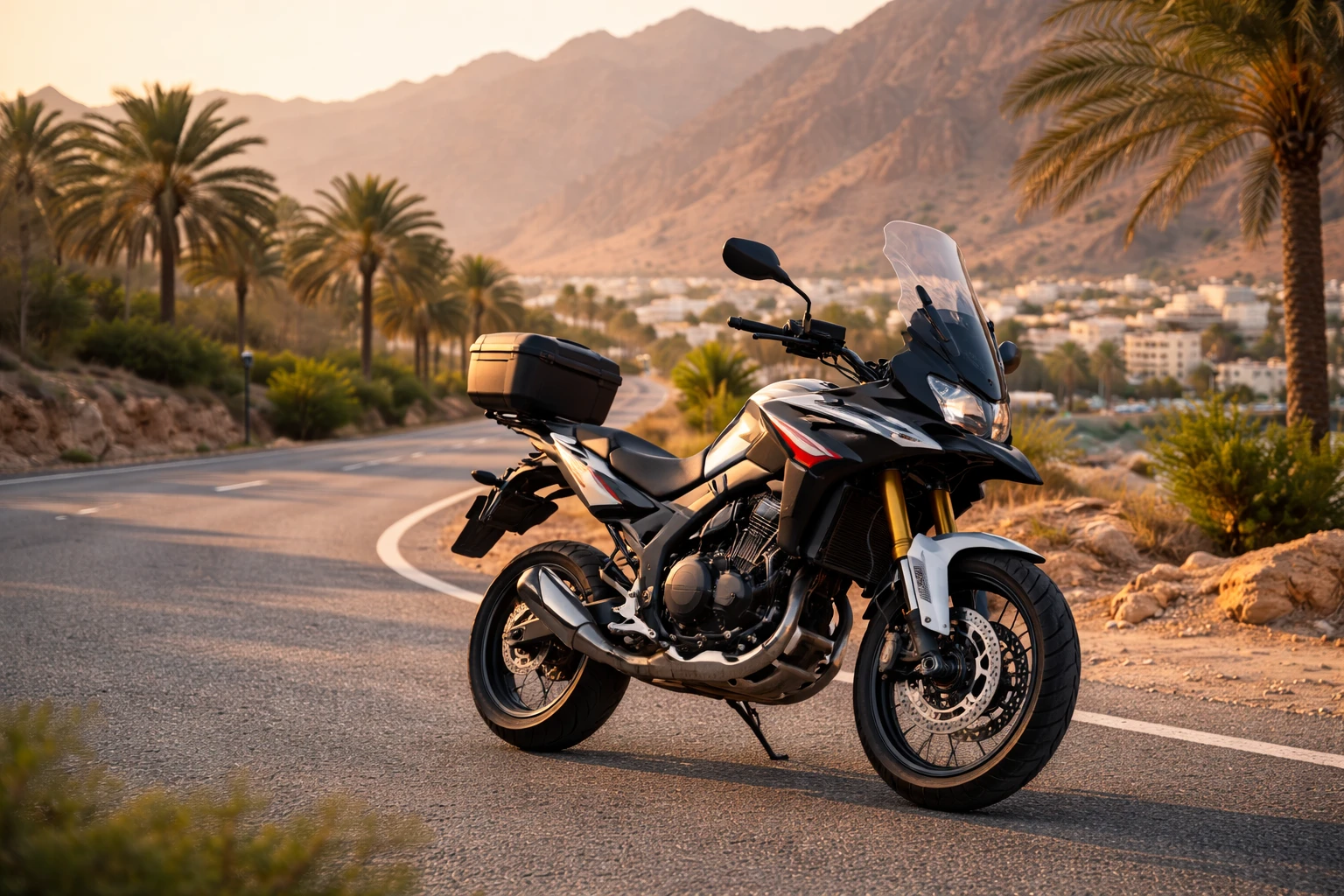
So you’ve decided it’s time. No more just watching bikes on the Muttrah Corniche or following rider pages on Instagram. You want your own machine.
Small detail: the motorcycle market here is still growing. Models come and go, stock is limited, and every ad seems to say “best condition, serious buyers only.” It’s very easy to get lost, especially if you buy motorcycle for the first time.
Let’s walk through it step by step, Oman-style: Muscat traffic, Nizwa runs, Jebel roads, Wahiba dust and all.
Step 1: Decide where you want to buy – new or used
New bikes: showrooms and official dealers
If you want warranty, service support and clear history, start with official dealers and brand sites:
- Sharmax Motors (Muscat showroom + online catalog) – on-road, off-road and touring bikes, with affordable prices and full after sale support. You can browse models and even start the process to order motorcycles online via the Sharmax Oman website.
- Japanese and other big brands – Honda, Yamaha, Kawasaki, etc., through their authorised distributors. They usually focus on road bikes, big tourers and some off-road models.
New bikes cost more at the start but make new motorcycle sales simple: you know the real mileage, you get a proper warranty, and you have someone to shout at (politely) if something goes wrong.
Used bikes: classifieds, online platforms and rider groups
If your budget is tighter or you want more variety, the used market is where you hunt:
- Dubizzle / OLX Oman – one of the biggest online platforms, with 200+ motorcycles for sale in Oman listings at any time. You’ll see everything from delivery scooters to Sharmax GP supersports and big Japanese models.
- OpenSooq Oman – a popular classifieds site with strong regional flavour and lots of bikes in different cities.
- OmaniCar – a more “automotive-focused” portal with cars and motorbikes, good for comparing offers on the same model from different sellers.
- Rider groups and themed chats – WhatsApp, Facebook and Instagram communities (including Sharmax Oman’s page) where bikes sometimes change hands quietly inside the group.
Used bikes are where you usually manage to buy a motorcycle for less money – but you have to inspect more carefully.
Step 2: Pick the type of bike that fits Oman, not Instagram
Before you even look at a motorcycle for sale in Oman, think about how you ride, not just how you want to look in photos.
A few quick questions help a lot:
- Will I ride mostly in the city or between cities?
- How often will I go into the mountains, wadis or rough roads?
- Do I need to carry a passenger or luggage regularly?
- Do I feel more like an on-road rider, an off-road explorer, or a mix of both?
From there, it’s easier to place yourself in one of three “Oman rider” styles:
- City & Corniche rider (on-road) – Most time in Muscat traffic, short hops, café runs and evening Corniche rides. Body types that fit: commuters, scooters, naked bikes, smaller sportbikes (250–400 cc) with upright or semi-sporty seating.
- Highway & mountains rider (on-road + light off-road) – Regular Muscat–Nizwa, Sohar or Sur trips, plus the occasional Jebel or wadi. Here, mid-size touring or adventure bikes make sense: on-road tyres, decent wind protection, and a bit more suspension travel for bad patches and gravel.
- Explorer & dirt lover (off-road / mixed) – Weekends on broken roads, gravel, tracks and viewpoints. Dual-sport, enduro or light adventure bikes with higher ground clearance and off-road tyres are your friends. They may not be the most elegant on the Corniche, but they feel very right when the asphalt ends.
Once you see which rider group you really belong to, buying a motorcycle becomes much easier: you’re choosing a tool for your routes, not a random poster for your wall.
Step 3: Understand the key specs for Omani conditions
Oman has three main settings: hot, very hot, and “why did I leave the house?”. Your bike has to survive all of them.
Engine and cooling
For most riders, engines between 250 and 650 cc cover city, highway and light touring. Above that is fun, but also hotter, heavier and more expensive.
Cooling is critical:
- Liquid-cooled engines cope better with slow traffic on Sultan Qaboos Street and summer temperatures.
- Air-cooled engines are simpler, but can suffer if you spend a lot of time at low speed in 40+ °C.
Suspension and ground clearance
Speed bumps, broken tarmac, and surprise gravel near construction zones are standard.
It helps if your bike has:
- Enough ground clearance to avoid scraping on steep ramps and village speed bumps.
- Suspension that isn’t made of stone – adjustable forks and shock are a big plus if you mix city and rougher roads.
Brakes and electronics
ABS is not just a luxury; it’s very helpful on dusty or sandy surfaces. Dual-disc fronts on bigger bikes and ABS on at least one wheel on smaller ones make day-to-day riding in Oman calmer, especially when someone cuts across three lanes to “just” take an exit.
Fuel tank and range
Distances between cities can be long and petrol stations are not always on every corner outside Muscat. A tank in the 14–20 litre range is comfortable for touring and weekend trips. For pure city use, you can live with less, but it’s still nice not to visit the station every two days.
Step 4: Shortlist and compare – online is your friend
Now that you know your type and basic specs:
- Use Sharmax, Honda and other brands’ sites to see what’s officially available.
- Check Dubizzle, OpenSooq and OmaniCar to see how the same models appear as used bikes.
- Save a few promising ads and note price, mileage, year and location.
Think of this phase as “window shopping with AC”. You’re not committing yet; just learning realistic prices before you order motorcycle online or go to see anything in person.
Step 5: Inspect the bike (or the showroom) properly
For used bikes
When you go to see a used bike:
- Look at tyres, chain, sprockets and brake discs – worn parts mean extra cost soon.
- Check for leaks around the engine and suspension.
- Inspect the frame for obvious bends or bad repairs.
- Start the engine from cold if possible – hard starting or strange noises are red flags.
- Take a short test ride if the seller allows it: listen for vibrations, check brakes, try low-speed turns.
If you don’t feel confident, bring a more experienced rider or pay a trusted workshop to inspect. In a small market like Oman, a few rials spent on inspection can save you a lot more later.
For new bikes
In showrooms (Sharmax Muscat, Japanese brand dealers, etc.):
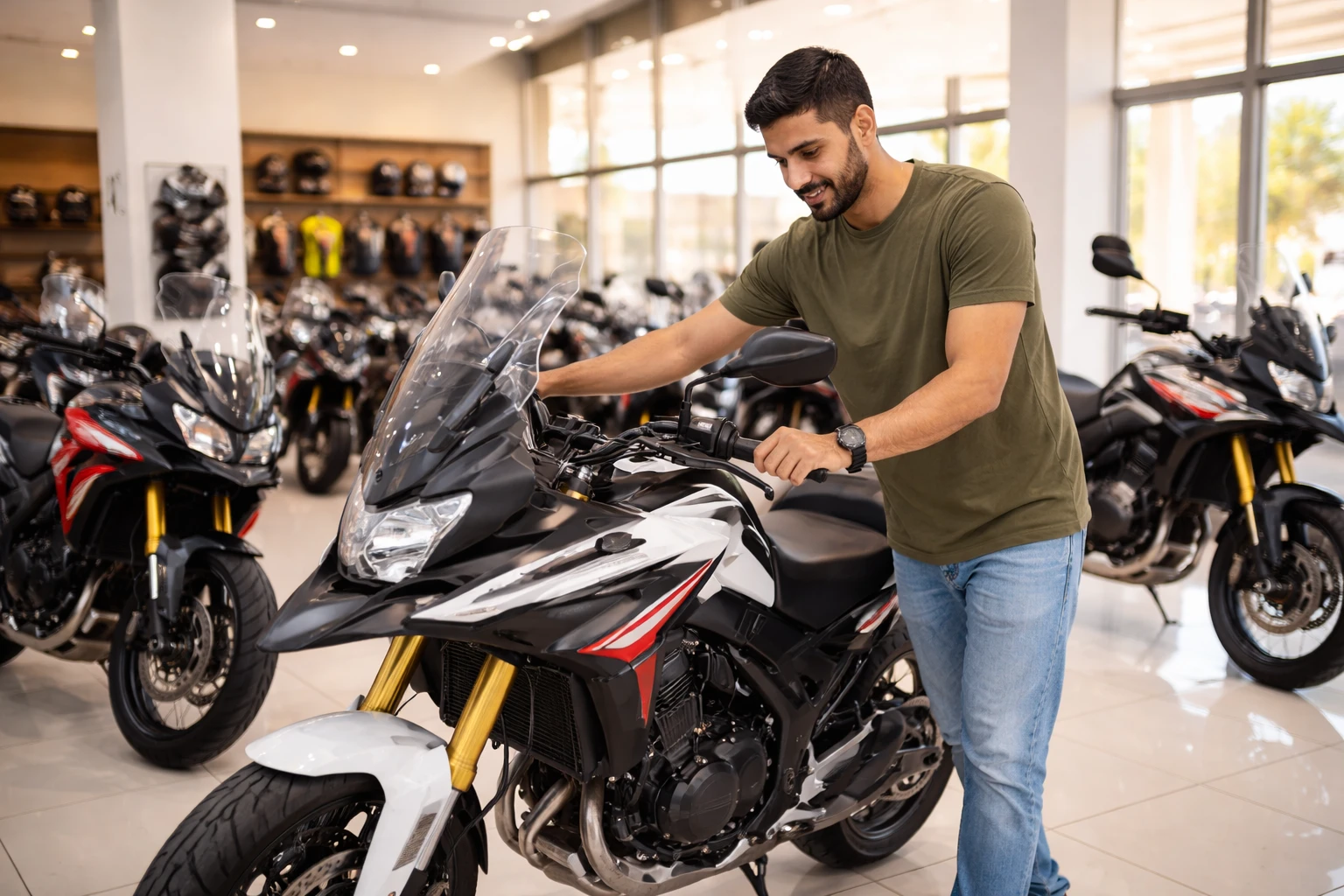
- Sit on several models, not just one. Check reach to the ground, handlebar position and general comfort.
- Ask about service intervals, warranty conditions and spare parts availability.
- Check if there are any seasonal new motorcycle sales or bundles (gear + bike, extended warranty, etc.).
Step 6: Paperwork, payment and registration
Whether it’s new or used, don’t rush the boring part:
- Verify the seller’s ID and make sure the name matches the registration card.
- For used bikes, check if there are any outstanding fines or payments.
- Go through the official ownership transfer process and insurance before your “first real ride”.
That “I’ll just ride home and do insurance tomorrow” idea sounds good only until something unexpected happens.
Step 7: Omani-flavoured tips and tricks
A few local tricks from the land of heat, mountains, and very photogenic fuel stations:
- Test at the right time. If you only test the bike at 9 PM in Shatti, you won’t know how it feels at 2 PM on Sultan Qaboos Street in August. Try at least one ride when it’s warm and traffic is real.
- Think about where you actually ride. If your real life is office–home–Lulu–coffee, an ultra-aggressive superbike is like wearing a tuxedo to City Centre Muscat. Nice, but not comfortable.
- Remember the mountains. If you truly want to ride to Jebel Akhdar or Jebel Shams one day, leave some comfort in your choice: suspension travel, tank size, and a seat that does not punish you after 150 km.
- Use the community. Ask other riders. They’ve already made the mistakes you’re trying to avoid. One karak in Al Mouj with an experienced biker is often better than three nights lost in forums.
And last, don’t forget: buying a motorcycle is not just a financial decision, it’s a lifestyle one. The right bike makes you want to ride from Muscat to Nizwa just for breakfast. The wrong one makes you start inventing excuses to take the car.
Wrap-up: turning “maybe one day” into “let’s ride”
Oman’s motorcycle scene is still growing, which means fewer models but also less noise and hype. If you use online platforms wisely, check each motorcycle for sale in Oman with a cool head, and keep your real routes and climate in mind, the process becomes much simpler.
Take your time. Ask questions. Look at more than one bike. And when you finally buy motorcycle that fits your life – not just your screen wallpaper – that first ride along the Corniche, or up towards Nizwa with the mountains in front of you, will feel absolutely worth the effort.
