
A driveway in a quiet suburb, four in the morning. A homeowner wakes to find the exhaust pipe under their car sawed clean through, the catalytic converter gone. The whole job took less than five minutes, according to AAA, and the thief was gone long before the sun came up.
That scene is playing out more often across the country. Carfax estimates that more than 137,000 catalytic converters were stolen nationwide in 2025, with thousands more taken in the opening months of 2026. Law enforcement in Bellevue, Washington, for example, reported more thefts in the first part of 2026 than in all of 2025 combined. It’s just one of several cities describing a renewed wave after two years of decline.
Precious metal prices may explain the timing. Rhodium, one of the metals packed inside a standard converter, spiked past $11,000 an ounce in March, according to Carscoops, roughly double where it stood a year earlier. The metal has traded far higher before, topping $30,000 an ounce during a previous run in 2021, but even at a fraction of that historical high, today’s price leaves a thief enough margin to make a five-minute crime worth the risk. A standard converter can fetch a scrapyard payout of a few hundred dollars, and a hybrid converter, with its higher metal content, can bring in over $1,000.
Trucks and SUVs remain the most frequent targets because their higher ground clearance lets a thief slide underneath without a jack. Hybrids draw thieves for a different reason. Their converters run cooler and corrode less, so more recoverable metal stays behind. Industry trackers point to summer months as a particular high-risk window, when parked cars sit longer in driveways and garages overnight.
How can you protect against converter thieves? Plenty of driveways already have a camera, whether built into a doorbell or mounted on a garage. The problem is what those cameras are built to do. A standard security camera records footage. It captures a converter theft the same way it captures a passing delivery truck, after the fact, with nothing to show for it but a clip of someone’s silhouette sliding under a bumper. By the time a homeowner sees the notification, the converter and the thief are already gone.
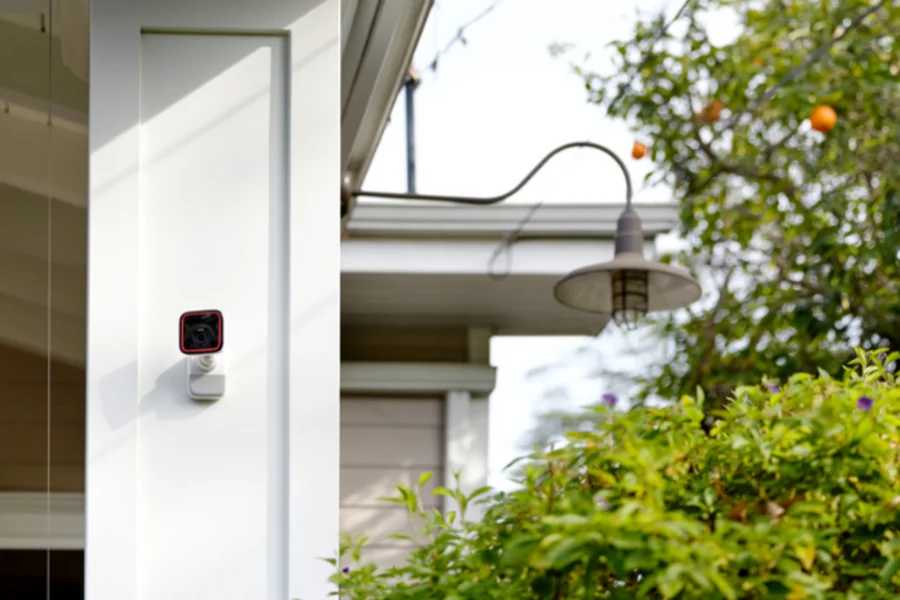
Vivint’s camera lineup takes a different approach. The Outdoor Camera Pro 3 pairs RADAR-enhanced detection with the company’s Smart Deter™ feature, which runs its analysis on the camera itself instead of sending footage to a remote server first. On-device processing removes the delay a cloud round trip adds, so the camera can respond in the same moment it identifies a person approaching a vehicle, rather than waiting on a server hundreds of miles away.
The RADAR component addresses the specific timing problem a converter theft creates. Because the crime happens fast and mostly in the dark, a camera that only turns on a light after someone has already started cutting is too slow to matter. The Outdoor Camera Pro 3’s RADAR-enhanced detection is built to identify a person approaching a parked vehicle before they reach it, triggering a sweeping spotlight and a strobing light response, with a paired Spotlight Pro escalating the effect further. A recent Vivint video walkthrough shows the detection and lighting response in sequence, from the moment a person enters the frame near a parked vehicle to the camera’s reaction.
None of this guarantees a theft never happens, but proactive deterrence shifts the odds toward a thief moving on rather than starting to cut into a car, and it shortens the window in which nobody responds. A system that only records has nothing to offer until after the theft. A system built to notice someone approaching a car and react in that moment gives a homeowner, and their neighbors, an actual chance to intervene while the thief is still deciding whether it’s worth the risk.
