
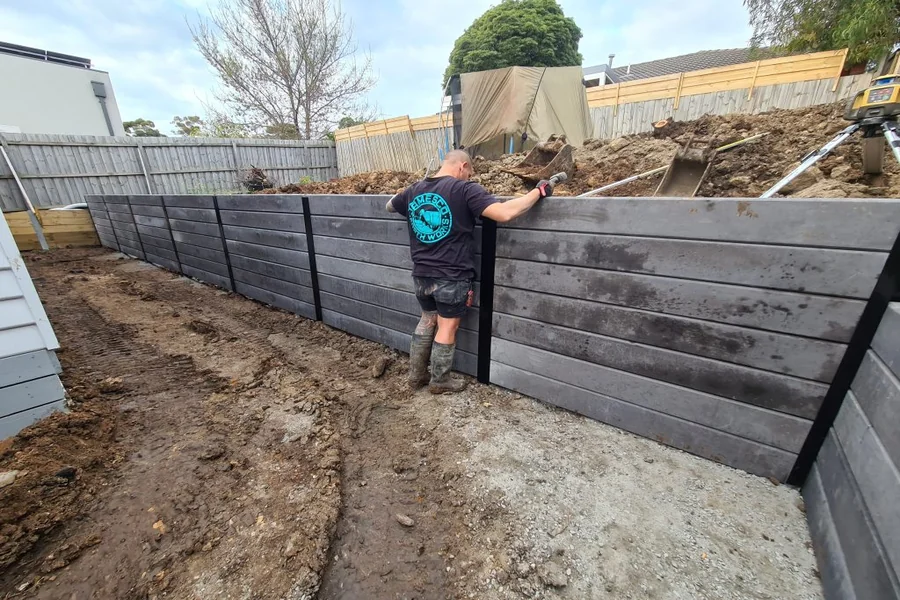
Retaining walls are structural elements carrying real loads under real conditions. When they are designed and built correctly, they perform reliably for decades. When they are not – or when they were built correctly but have been subjected to conditions that have degraded their performance – they can fail. Sometimes gradually and visibly, sometimes suddenly. For homeowners with existing walls or those planning new retaining walls Perth projects, understanding the common failure mechanisms and the early signs that a wall may be under stress is genuinely useful knowledge.
The Primary Driver of Failure: Drainage
The single most common cause of retaining wall failure – regardless of material – is inadequate drainage. Water that accumulates in the soil retained behind a wall does not simply sit there. It exerts hydrostatic pressure against the wall face, and that pressure increases proportionally with the depth and volume of water present. After extended rainfall, the pressure can reach levels that exceed the wall’s designed capacity.
The frustrating aspect of this failure mode is that it is almost entirely preventable at the time of construction. Gravel backfill immediately behind the wall, agricultural drainage pipe at the base, and adequate weep holes through the wall face cost a relatively small amount to include correctly during a build. They are extremely difficult and disruptive to retrofit once the wall is complete and the garden is established. The absence of these elements – whether by design, oversight, or corner-cutting – is a time bomb.
Inadequate Footings and Structural Design
Retaining walls resist horizontal soil pressure through a combination of mass, embedment depth, and – for more engineered systems – connection to structural elements like posts or piers. The footing design is critical: it determines how deep the wall is embedded, how much resistance it has to forward sliding and overturning, and how well load is distributed to the bearing layer.
For walls over approximately a metre in height, or in any situation involving unusual loads, poor soil conditions, or proximity to structures, a proper engineering assessment of footing design is important. Walls that were built by previous owners without professional involvement – or during periods when building standards were less demanding – may have footings that are undersized for the conditions they are actually experiencing.
If you do not know the engineering behind an existing wall on your property, it is worth having it professionally assessed, particularly before adding any load above it, extending it, or making changes to drainage patterns in the area.
The Signs of Wall Movement
The early indicators of retaining wall movement are often subtle enough to miss on casual inspection. A slight but consistent forward lean is one of the most visible. Horizontal cracking in the face of a masonry wall, or separation of individual sleepers or blocks from their neighbours, indicates that the wall is moving under load. Cracks in paving or garden beds directly above or in front of the wall can indicate movement in the retained soil.
Vertical cracks in a masonry retaining wall are often less serious than horizontal ones – they typically indicate thermal or moisture movement rather than structural distress. But any cracking should be assessed by someone with the expertise to distinguish between cosmetic movement and structural concern.
Early detection of movement matters because the options available for intervention change significantly as movement progresses. A wall that is beginning to move can often be stabilised or reinforced. A wall that has moved substantially may require partial or complete reconstruction.
Surcharge Loading: Loads the Wall Was Not Designed For
Many walls that were originally designed for a garden setting have had additional loads applied above them over time – a driveway extension, a concrete entertaining area, a garden shed or outbuilding, or substantial planting. These additional loads, referred to as surcharge, increase the horizontal pressure transmitted to the wall and may exceed the original design assumptions.
This is worth considering in two contexts: when planning to add a new load above an existing wall, and when purchasing a property where a wall has existed for some years and the current configuration above it may not match what was in place when the wall was designed.
An experienced landscaper or structural engineer can advise quickly on whether a particular loading scenario is within the capacity of an existing wall – which is a considerably simpler and cheaper exercise than dealing with a wall failure after the load has been applied.
Vegetation, Roots, and Moisture Management
Large trees growing in close proximity to a retaining wall can create structural challenges in ways that are not always immediately obvious. Root systems can penetrate the wall structure, gradually displacing blocks or sleepers. The roots of established trees also draw significant moisture from the surrounding soil, changing its behaviour – and when those trees are removed, the sudden change in moisture conditions can cause previously stable soil to move in ways that stress the wall.
Planting choices near retaining walls deserve consideration both at the time of landscaping design and when making later changes to an established garden. Deep-rooting species, particularly trees, should generally be kept well back from wall structures. Groundcovers and shallow-rooted shrubs are better choices for the immediate planted area.
Simple Maintenance That Extends Wall Life
Retaining walls benefit from basic periodic attention. Weep holes should be checked and cleared of debris that may have accumulated and is blocking drainage. The soil immediately behind the wall should be monitored for signs of erosion, settlement, or water pooling that may indicate a drainage issue developing.
Any movement or cracking should be documented and monitored – noting when it was first observed, measuring its extent, and tracking whether it is stable or progressing over time. Stable historic cracking is very different from active movement, and having a record helps anyone who subsequently assesses the wall to make that determination.
A wall that receives a little attention over its life is far more likely to give clear warning of emerging issues than one that is simply assumed to be fine until it obviously is not.
Retaining walls that are looked after – assessed occasionally, maintained simply, and taken seriously when they show signs of distress – repay that attention many times over. The walls that fail are almost always the ones that were assumed to be fine.
