
There are several ways to check if your catalytic converter needs your immediate attention. But the most important thing is to note when you need to repair or replace this portion of your car because this can affect the performance of the engine. While a standard replacement can restore the car to its original condition, using a high flow catalytic converter can offer the potential for improved power and sound.
Why You Need to Replace the Catalytic Converter
A failing catalytic converter must be replaced for safety, legal compliance, or environmental responsibility. Most of all, it can prevent costly or severe damage to your engine. If you ignore them, it can lead to much more significant problems down the line.
1. Prevents Engine Damage
A broken or clogged catalytic converter can create significant exhaust backpressure, which can prevent the engine from expelling waste gases efficiently. Thus, it can cause engine overheating, reduced power and acceleration, and engine misfires and stalling.
2. Ensures Safety
The extreme heat under your car is probably caused by a failing catalytic converter. Consequently, this can cause a fire hazard. Moreover, if the internal components break apart, you will experience sudden, total blockage, which makes the car difficult or impossible to drive.
3. Legal and Compliance Requirements
In most places, including Australia, operating a vehicle with a bad catalytic converter is illegal. For instance, your vehicle will not pass a required state or local emissions test. That said, driving a non-compliant vehicle can result in fines, legal penalties, or suspension of your car’s registration.
4. Environmental Responsibility
The main reason why you need it to function properly is because it will convert highly toxic exhaust gases into less harmful substances. A bad converter will mean your car is releasing excessive amounts of pollutants into the atmosphere.
5. Restores Vehicle Performance and Efficiency
This will ensure that your car will have optimal engine performance if you replace a bad one. In addition, the engine no longer has to work harder, improving the gas mileage. At the same time, this enables the engine to have proper exhaust flow for the engine to breathe correctly, while restoring acceleration and power.
Why Consider High Flow Aftermarket Converters
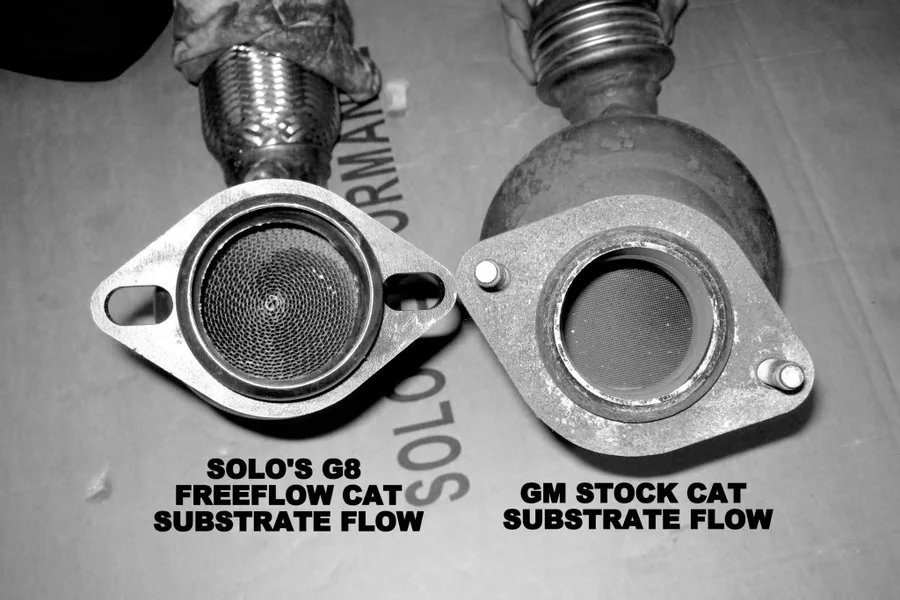
Take note that these converters use a less dense core, which means that it will allow exhaust gases to exit the engine more rapidly.
1. Improved Performance
You can actually reduce the restriction or the backpressure in the exhaust system, increasing horsepower and torque, especially at higher RPMs.
2. Enhanced Sound
While reducing restriction, it can also contribute to the sportier, more aggressive exhaust note when you compare it to the quieter, more muffled sound of a standard OEM converter.
3. Emission Compliance
High flow cats are also designed to be EPA-compliant, unlike the cat delete, which is illegal for street use in most states.
4. Better Throttle Response
The engine can react faster to throttle inputs with less backpressure, which can result in a more immediate and responsive driving experience.
You can talk to an expert today by giving us a call to learn more about the benefits of a catalytic converter to your vehicle. We can also assist you in finding the right high flow catalytic converter to suit your car’s make and model.
