
Why This Test Gets Ordered
A diagnostic angiogram lets a doctor see inside your blood vessels in real time. It uses a thin catheter, a small amount of contrast dye, and live x-ray images to find blockages, aneurysms, or other vascular problems. Doctors order it when scans like an ultrasound or CT cannot give a clear enough picture, or when they need to plan a treatment.
If this is your first one, the idea of a catheter moving through your blood vessels can sound worse than it actually is. Most people are surprised by how routine the day feels once it is underway.
Before the Procedure
You will usually get instructions a few days ahead of time. Common ones include:
- Stop eating and drinking for a set number of hours beforehand, usually overnight.
- Tell the team about any blood thinners, metformin, or contrast allergies.
- Arrange a ride home, since you will not be cleared to drive yourself.
- Wear loose, comfortable clothing you can move in easily afterward.
A nurse will usually check your kidney function with bloodwork first, since the contrast dye is processed through the kidneys. If you have had a reaction to contrast dye before, say so early. There are ways to adjust the plan for that.
What Happens in the Room
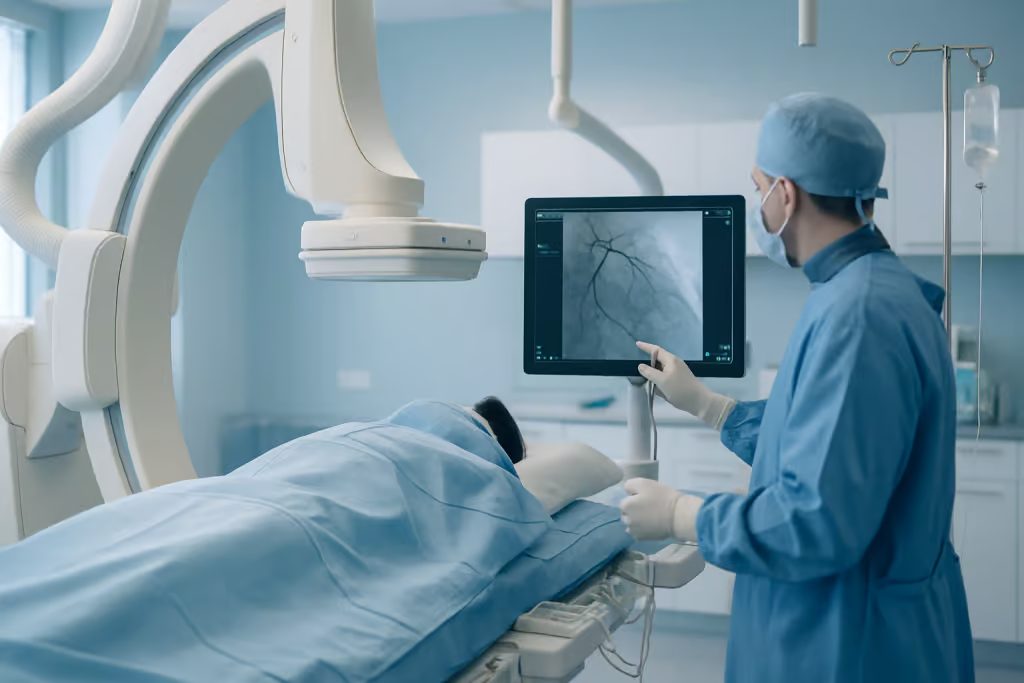
You will lie on a table under a large imaging arm called a fluoroscope. A small area, usually near the wrist or the groin, gets cleaned and numbed with local anesthetic. That numbing shot is typically the only part that stings.
From there, a doctor threads a thin catheter through the artery and guides it to the area being examined, watching its path on a screen the whole time. You will not feel the catheter moving inside you. When the contrast dye is released, some people feel a brief warm flush, sometimes described as feeling like you need to urinate for a few seconds. That passes quickly.
Most diagnostic angiograms take somewhere between thirty minutes and an hour, though it varies by what is being examined.
The Technology Behind the Scenes
The catheters, wires, and imaging systems used in these procedures have changed a lot over the past two decades, mostly aimed at making them smaller, safer, and easier to navigate through narrow or winding vessels. David Ferrera, CEO of RC Medical, works on developing exactly this kind of device for the interventional radiology field. Advances like these are part of why many angiograms that once required an overnight hospital stay are now done on an outpatient basis.
Right After the Procedure
Once the catheter comes out, pressure gets applied to the access site for several minutes to stop any bleeding. Some centers use a small closure device instead, which can shorten this step. You will then rest flat for a period of time, often one to two hours, so the site can seal properly.
It is normal to feel a little tired or groggy from any sedation used. Some mild bruising or a small lump at the access site is common and usually fades over a week or two.
Recovery at Home
Plan for a quiet day once you get home. Most people are back to normal activity within 24 to 48 hours, though your doctor will give you a specific timeline based on what was done.
A few general guidelines apply to most patients:
- Avoid heavy lifting or strenuous exercise for a few days.
- Keep the access site clean and dry as instructed.
- Drink extra water to help flush the contrast dye out of your system.
- Watch the site for swelling, warmth, or drainage.
When to Call Your Doctor
Most recoveries are uneventful, but a few signs are worth a call right away:
- Swelling that keeps growing at the access site
- Numbness, tingling, or cold feeling in the limb used for access
- A fever
- Ongoing bleeding that does not stop with gentle pressure
These are not common, but knowing them ahead of time means you will not have to guess whether something is worth mentioning.
Getting Your Results
Unlike some imaging tests, an angiogram often gives the doctor real-time answers during the procedure itself. Depending on what is found, you may leave with a clear plan already in place, or with a follow-up scheduled once the images are reviewed in full. Either way, it helps to ask ahead of time how and when you will get the results, so you are not left wondering.
