
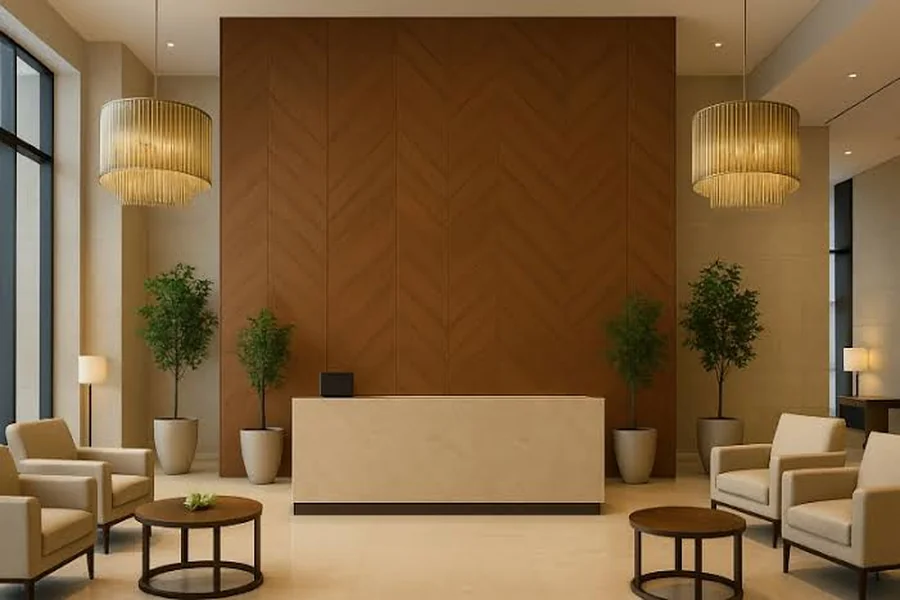
Nobody remembers a hotel lobby that looked like every other hotel lobby. In a sector built almost entirely on atmosphere and first impressions, hospitality designers have leaned hard into textured wall panels over the last few years, precisely because texture does so much of the emotional heavy lifting that a plain painted wall simply can’t manage. Guests are increasingly booking experiences as much as rooms, and the interior design is a huge part of that experience.
Texture over paint, and for good reason
A stone feature wall behind a hotel reception desk, exposed brick in a boutique bar, a warm timber-look panel running along a restaurant corridor, these choices all say something about the character of a venue before a guest has even sat down. Paint can set a colour mood, but it rarely creates the same sense of depth or story, and it doesn’t hold up nearly as well in high traffic areas that see constant contact from luggage, furniture and general use.
Fire safety doesn’t have to kill the creativity
There’s sometimes a slightly defeatist attitude in hospitality design that anything genuinely characterful must be a fire compliance headache waiting to happen. In reality, textured panel systems tested as complete assemblies can achieve a strong fire rating while still delivering the visual richness a hospitality brief is asking for. The trick is choosing manufacturers who’ve done that testing properly rather than assuming a nice looking finish is automatically a safe one, and asking for the paperwork to prove it.
Where hospitality designers tend to get this right
The venues that pull this off well usually pick one or two strong textures and use them intentionally, a feature wall here, a corridor treatment there, rather than covering every surface in competing finishes. Texture works best as a statement, not wallpaper, and the restraint is often what separates a genuinely well designed hospitality interior from one that just feels busy.
Acoustics deserve a mention too
Hospitality venues are often loud, busy environments, so it’s worth thinking about acoustic performance alongside visual impact. Some textured panel systems can be paired with acoustic backing to help manage noise in bars and restaurants, which is a nice bit of practical value hiding behind what looks like a purely decorative choice. Guests notice when they can hold a conversation without shouting, even if they never consciously register why the room feels calmer than the last place they visited.
Wrapping it up
Textured interior wall panels have earned their place in hospitality design because they do something paint just can’t, they make a space feel considered and specific. With the right fire testing behind the finish, there’s no reason character and compliance can’t sit comfortably in the same room, and the venues getting this right are increasingly setting the standard the rest of the sector is trying to catch up with.
Durability matters just as much as first impressions
Hospitality venues take a beating that a lot of other commercial spaces simply don’t, luggage trolleys, room service carts, late night crowds and daily deep cleaning all add up over time. A texture that looks stunning on opening night needs to be able to hold that same impression two or three years later, once the initial shine has worn off and the venue is running at full capacity night after night. It’s worth asking suppliers directly about wear resistance and cleaning requirements for any finish being considered, particularly in high contact areas like corridors, lift lobbies and bar fronts, since these tend to show wear far sooner than a quiet feature wall in a dining room.
