
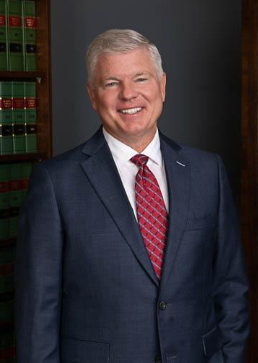
A former King County prosecutor built a Seattle injury practice around the people his criminal cases couldn’t make whole.
The woman came out of the motorcycle crash with four fractures in four different parts of her body: a pelvis, a leg, an arm and a wrist. She couldn’t walk on the leg. She couldn’t use crutches, because of the arm and the wrist. The pelvis made even sitting up in bed a project.
Her case, out of King County, now sits at the top of the published results page at Pendergast Law, the Seattle personal injury firm run by Joseph “J.P.” Pendergast. The firm recovered $4,050,000 for her. Pendergast, the owner and managing attorney, will tell you the number gets everybody’s attention. He spends more time talking about what came before it.
“Motorcycle riders walk into a claim with a target on their back,” he says. “The first assumption from a lot of adjusters is that the rider was going too fast or doing something reckless, and you spend a lot of energy just knocking that assumption down so the case can be judged on what actually happened.”
Then came the medical side: months of recovery, physical therapy, time off work, and the open question of what her body would look like five and ten years out. “If you settle early, before the full picture comes into focus, the client is the one who pays for that mistake,” Pendergast says. “So we took the time to get it right.”
A Seattle kid at the courthouse
Pendergast was born in Seattle. He earned his undergraduate degree at the University of Washington in 1989, went down to Eugene for law school at the University of Oregon, and came right back. He was licensed in Washington in 1993 and went straight to work as a Deputy Prosecuting Attorney for King County.
He stayed five years. The work put him in front of juries, and it put him face to face with what one careless moment on the road does to a family. Case after case, a driver’s carelessness changed somebody else’s life for good. There were medical bills and lost jobs. Families got thrown off course.
He kept noticing the same gap. Whatever happened in the criminal case, it didn’t pay a single medical bill or replace a single paycheck for the people who got hurt.
“That stuck with me,” he says. “The same rigor I was putting into prosecutions was needed on the civil side, working directly for the injured person instead of for the state.”
In 1998, he made the jump.
Betting on himself
Leaving was the first hard stretch. The prosecutor’s office was steady, respected work with a government paycheck behind it. Representing injured people meant going out on his own with no promise that the phone would ring.
“Walking away from a government paycheck to represent injured people meant betting on myself, and there’s no guarantee anybody calls,” he says.
What carried him through was a habit he brought with him from the courthouse. A prosecutor builds every case as if someone is going to tear it apart, because someone will. Pendergast kept doing that. Every police report, every medical record and every photo gets read as if it’s going to be challenged. Over time, he says, that showed up in the results.
The firm he leads has older roots than his own career. It goes back to 1966 and once operated under the Hardwick Pendergast name before it became Pendergast Law. Running it gave him the freedom to hire whoever he thought would help injured people most.
The other hard stretch never ends. Insurance companies, Pendergast says, are built to pay as little as possible, and they’re good at it. They use formulas tied to medical billing codes. Adjusters call injured people a day or two after a crash, ask for a recorded statement and dangle a quick check. A herniated disc or a soft tissue injury can take weeks to fully show itself. Once somebody signs a release, it’s almost always final.
His answer was to stop fighting insurers with only lawyers and paralegals. He brought in former insurance adjusters and claims analysts, people who spent years on the other side deciding what claims were worth. They know how a file gets valued and where an insurer will push. With them in the building, the firm can spot a lowball earlier and push back on it harder.
Three sides of the table
Most injury lawyers come up through civil litigation. Pendergast came up prosecuting criminal cases, and he counts that as a different kind of education. He learned how a jury reacts to evidence in real time, and how to tell a story about what happened so that twelve regular people can follow it.
He built the rest of the firm to cover the angles he didn’t. Richard Aguire, one of the firm’s attorneys, was a sheriff’s deputy with the Dane County Sheriff’s Office in Wisconsin before he went to law school at Seattle University. He has stood on the shoulder writing up a crash scene, and he knows what one looks like before the paperwork starts. He’s also fluent in Spanish.
“Somebody describing the worst day of their life should be able to do it in the language they think in,” Pendergast says.
Put Aguire together with the former adjusters and claims analysts, and the firm has seen a claim from the patrol car, from the insurance company’s desk and from the courtroom. Christopher Pruitt rounds out the attorney side. Storm Shouman negotiates with insurers. Zach Kozma runs intake, and Anthony Ramos is the chief operating officer. “A firm is only as good as the people answering the phone,” Pendergast says.
Geography is part of the design, too. The firm has offices in Seattle, Renton and Tacoma. For years, Pierce County clients were served out of Renton and Seattle. In 2024 the firm opened its Tacoma office at 1145 Broadway, so people down there no longer have to fight I-5 traffic just to sit down with a lawyer. Someone meeting an attorney for the first time is usually having one of the worst weeks of their life, as Pendergast sees it, and they shouldn’t have to drive across the Sound to do it.
Following the case where it goes
Some of the firm’s cases start a long way from Seattle. One began about 2,600 miles away, in Honolulu, where a Seattle man was riding a motorcycle when a California tourist in a rental car hit him. He was badly hurt. The claim involved a Washington client, a Hawaii crash, an out-of-state driver and a rental car with its own layers of coverage. The firm recovered $2,500,000 for him.
“People sometimes assume we only handle what happens on I-5 or 405,” Pendergast says, “but if you live here and you get hurt, we’ll follow the case where it goes.”
Another case had nothing to do with a car. A Cambodian refugee in Seattle suffered a degloving injury to his left hand because of a defective spring in a power winch control. The firm recovered $2,400,000 for him. Pendergast still thinks about a man who had already lived through so much, and then lost the use of a hand to a piece of equipment that was supposed to be safe.
The results page holds others he remembers. There was $4,000,000 for a Seattle man whose foot was crushed by a commercial truck, leaving him with toe amputations. The family of a man killed in Tukwila by an unattended vehicle received $2,150,000. A Tacoma man pinned between two commercial trucks received $1,850,000.
The recognition has followed. Pendergast has been selected to Super Lawyers every year from 2022 through 2026. He holds a 10.0 Superb rating on Avvo, and he’s a Fellow of the American Bar Foundation and a life member of the Multi-Million Dollar Advocates Forum. He’s glad to have the honors, but he doesn’t lean on them. A plaque, he says, doesn’t tell you much about what a case was like.
The moment the shoulders drop
The part of the work that keeps him going is smaller than any verdict. It happens at the first meeting with a new client.
“They’ve got a stack of medical bills, they’ve missed work, an adjuster has been calling, and they finally get to lay it all out for someone whose job is to handle it,” he says. “You can watch their shoulders come down a little. They realize they’re not carrying it by themselves anymore.”
One client, Rita from Graham, put it in her own words: “They took the stress off me so that I didn’t have to worry about anything and could go on with my life.”
Pendergast raised his family in the same region where he built his practice, and the firm shows up in it outside the office. Its team sponsored the Downtown Tacoma Blues and Jazz Festival, and Kozma came back saying the day reminded him how much community connection matters. Pendergast wants more of that. He’d like people to know the firm from the music festival and the neighborhood long before they need it for a car accident.
Staying here
The firm’s ads carry a line Pendergast says he means every word of: “Born here. Raised here. Staying here.” He has no interest in opening offices in five states. The plan is deeper roots in Seattle, Renton and Tacoma, with local people who pick up the phone at any hour.
He also wants to do more teaching. He already wrote a book for people hurt in auto accidents, because most people don’t learn their rights until the moment they need them. The thing that frustrates him most is a choice drivers make years before a crash without realizing it. Personal Injury Protection isn’t mandatory in Washington, but insurers have to offer it, and a driver has to reject it in writing. The same goes for underinsured motorist coverage. People sign the rejection when they buy a policy, forget about it, and learn after a serious wreck that they gave away the coverage that would have paid their bills.
“If we can get even a few thousand more drivers to pull out their policy and check,” he says, “that’s worth more than any ad.”
As the firm grows, he wants it to keep the habit he carried out of the courthouse in 1998. Every case, he says, should be handled as seriously as he once handled his most important prosecutions, by people who have seen the business from more than one side of the table.
