
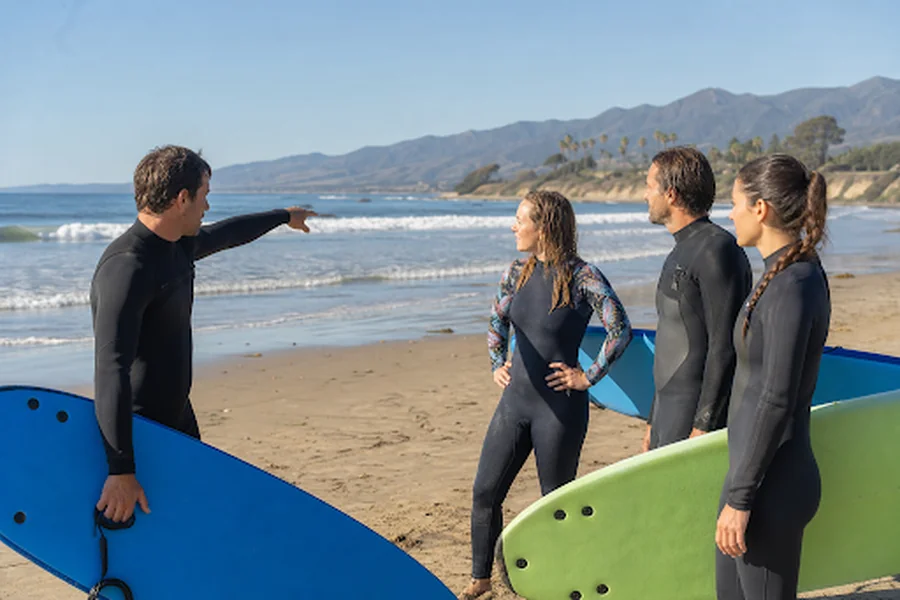
Well-designed surfing classes connect the many small skills behind a first ride. Paddling, wave selection, board control, stance, trimming, and turning develop at different speeds. A clear sequence helps students understand what to practice now and what can wait.
That is the value of a course-based approach. It does not need to mean a rigid classroom program or a long commitment. It simply means that each session has an objective, feedback from one lesson informs the next, and the difficulty increases only when the foundation is stable.
What well-designed basic surf lessons should teach
The beginning stage is about control and awareness. Before entering the water, students learn how to carry the board, manage the leash, identify the practice area, and respond to an instructor’s directions. They rehearse paddling position and the pop-up on land, where a coach can correct movements without the distraction of waves.
In the water, a beginner first needs to keep the board pointed correctly and feel how it accelerates. Broken waves offer enough energy to practice stance and balance without requiring advanced wave selection. The instructor may steady the board or give it a push, then reduce that assistance as the student becomes consistent.
Core skills at this stage include:
* Positioning the chest and hips correctly on the board;
* Paddling with alternating, efficient strokes;
* Looking toward the direction of travel;
* Moving the feet to the center line;
* Maintaining flexible knees with a relaxed upper body;
* Falling away from the board;
* Maintaining safe space from other people.
These points can sound simple on land. In motion, they compete for attention. A structured lesson focuses on one or two corrections at a time so the learner can feel the difference.
Moving from whitewater to intermediate surf lessons
The intermediate stage begins when a surfer can catch waves with less help and stand with some consistency. The next challenge is not a more dramatic pop-up. It is making better decisions before the wave arrives.
Students learn to read the lineup, identify where a wave is likely to break, choose direction, and adjust position. Paddling becomes more purposeful because timing determines whether the surfer catches the wave early enough to control the ride. Once on the face, the rider works on trimming, generating speed, and making deliberate turns.
Video can be useful at this level when it is available, but immediate observation remains valuable. A coach may notice that the surfer looks down, stands too tall, places the back foot too far forward, or turns the shoulders without engaging the lower body. One clear correction can improve several rides in a row.
Intermediate does not mean ready for every beach. Wave size, current, crowd, and bottom type still matter. Training should increase challenge gradually and preserve the habit of choosing conditions that match ability.
How surfing classes can form a useful progression
A practical sequence might start with a first session on safety, board position, and assisted rides. The second can emphasize independent paddling and timing. Later sessions may introduce unbroken waves, directional takeoffs, trimming, and basic turns. The exact order changes with the student and the conditions.
Santa Barbara Surf School offers instruction for beginners and surfers who want to progress, with boards, leashes, wetsuits, and coaching included in its lesson description. The team monitors local conditions and confirms the teaching location after booking. Current details should be checked directly before planning a visit.
Continuity helps. The same instructor can track recurring habits and set the next objective. If coaches change, notes about the previous lesson keep the course moving. Students can record what they practiced, what felt difficult, and which cue produced a better ride.
Designing surf lessons for adults around realistic needs
Adults come to surfing with varied backgrounds. Some swim regularly; others have not spent much time in open water. One person may have excellent balance from another board sport, while another has limited hip or shoulder mobility. Age alone says little about the right starting point.
Adult instruction should allow time for questions and recovery. A warm-up prepares the shoulders and hips, and a stable beginner board reduces the effort needed to catch early waves. The coach can adjust the pop-up while keeping the essential mechanics intact. Short rests often improve learning because tired students rush movements and stop processing feedback.
Goals matter too. A traveler may want a safe first experience during a vacation. A local student may want enough independence to practice between lessons. Someone returning to surfing may need help rebuilding judgment rather than learning every movement from scratch. A course works best when the instructor knows which outcome matters.
What surf lessons for beginners should not promise
“Stand up in one lesson” is an appealing slogan, but it is a weak definition of success. An instructor can push a large board into whitewater and help many students reach their feet. That moment is exciting, yet it does not automatically teach the student to repeat the ride alone.
A stronger first-session outcome includes understanding the practice area, handling the board safely, improving paddling position, and knowing what to work on next. Standing may be part of the result, but it should not overshadow safe habits.
The ocean also prevents honest guarantees about identical conditions. Wind and swell change. A responsible school may move the meeting point, adjust the session, or recommend another time when the selected beach does not support useful instruction. Flexibility is evidence of local judgment, not poor organization, provided the communication is timely and clear.
How to practice between coached sessions
Independent practice should reinforce familiar skills in suitable conditions. Beginners can repeat the pop-up on land, build swimming endurance, and work on shoulder mobility. In the water, they should stay at a location appropriate for their ability and avoid practicing alone when they lack ocean experience.
Quality matters more than counting attempts. After a missed wave, identify one cause: the board was angled, paddling started late, the chest was too far forward, or the pop-up paused halfway. Choose one adjustment for the next ride. Trying to repair five things at once usually makes movement less natural.
Recovery is part of training. Surfing uses muscles that many people do not load in daily life, particularly the shoulders, back, and hips. Spacing sessions gives the body time to adapt and helps the learner return focused rather than sore and defensive.
Choosing the right course structure
Before booking several sessions, ask how the school evaluates level, whether equipment is included, how locations are chosen, and whether instructors can adapt the plan when conditions change. Clarify if sessions must be used on fixed dates and whether the same coach is likely to teach them.
A good course is neither a random series of surf outings nor a checklist followed regardless of the student. It has direction and flexibility at the same time. Each session should answer two questions: what became more consistent today, and what is the next skill that will make the surfer more independent?
Progress rarely arrives in a straight line. A student may stand easily one day and struggle with timing the next. Structured instruction keeps those fluctuations in perspective. The goal is not a perfect lesson; it is a growing ability to understand the ocean, make sound choices, and create more successful rides without relying on constant assistance.
