
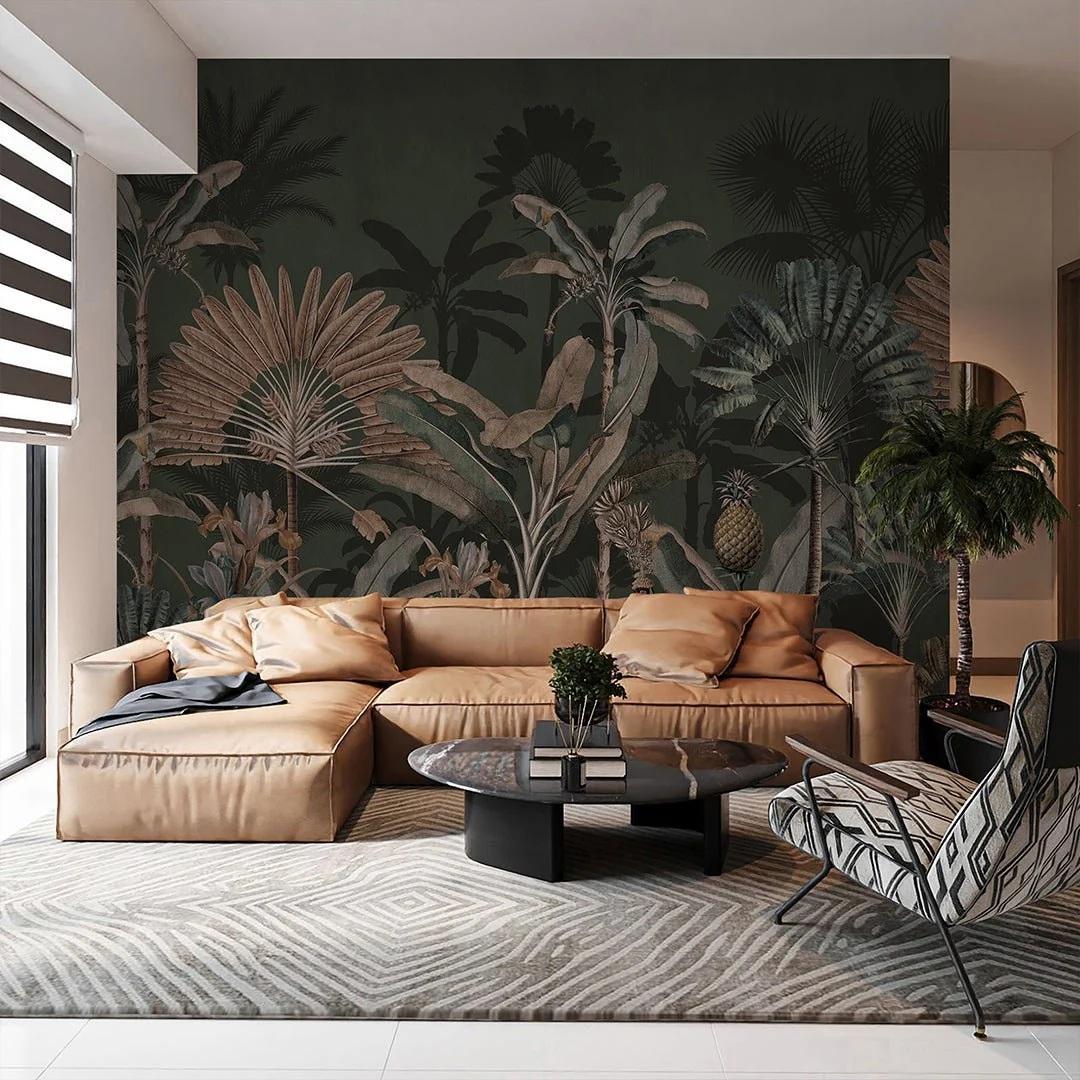
An accent wall can change the character of a room without requiring a complete renovation. Instead of replacing furniture or redesigning the entire space, homeowners can use color, pattern, or a large-scale image to create a new focal point. Modern peel and stick wall murals make this approach particularly flexible, allowing dramatic landscapes, botanical designs, abstract artwork, and other oversized patterns to become part of the room itself.
Because peel-and-stick wall coverings are designed for relatively straightforward application and removal, they can also be a practical option for people who want a significant visual update without committing to traditional pasted wallpaper.
Choose the Right Wall
The success of an accent wall begins with its location.
Ideally, the selected wall should already attract attention when someone enters the room. Common choices include the wall behind a bed, sofa, dining table, television console, or home-office desk.
Architectural features can also help determine placement. A fireplace wall, recessed area, or wall at the end of a hallway may naturally work as a focal point.
Avoid selecting a wall simply because it is empty. Consider how the entire room is viewed and where the eye naturally travels.
Decide Between a Mural and a Repeating Pattern
Wall murals and repeating wallpaper patterns can both create accent walls, but they produce different effects.
A mural behaves more like oversized artwork. The design typically stretches across the wall as one composition, making it suitable for landscapes, large botanicals, abstract imagery, and scenic designs.
Repeating wallpaper creates a more consistent pattern across the surface. Florals, geometric motifs, stripes, and textured effects are common examples.
The choice depends on how much visual attention the wall should receive.
If the goal is to create a dramatic centerpiece, a mural can have a greater impact. If the accent wall needs to complement furniture and décor without dominating the room, a repeating pattern may be more appropriate.
Match Pattern Scale to the Space
Pattern scale has a significant effect on how a room feels.
Large botanical leaves, oversized flowers, broad geometric forms, and panoramic murals immediately attract attention. These designs can work particularly well on large uninterrupted walls.
Smaller patterns usually create a more subtle effect and can be easier to combine with detailed furniture, artwork, or textiles.
However, small rooms do not automatically require small patterns. A large-scale mural in a powder room, nursery, or compact bedroom can create an intentionally immersive effect.
The important consideration is visual balance rather than room size alone.
Coordinate the Wall With Existing Colors
An accent wall should stand out while still feeling connected to the rest of the room.
Before choosing a design, look at the colors already present in flooring, furniture, curtains, rugs, and other major elements.
One simple approach is to select a wallpaper or mural containing at least one color already used elsewhere in the room.
For example, a botanical mural containing muted green can connect naturally with green cushions or plants. A warm neutral wallpaper may coordinate with wood furniture and beige textiles.
This creates continuity even when the wall itself is visually bold.
Use Peel-and-Stick Wallpaper for Easier Updates
One advantage of creating an accent wall rather than decorating the entire room is flexibility.
Using accent wall wallpaper in a peel-and-stick format allows homeowners to make a substantial design change without treating it as a permanent renovation.
This can be useful in bedrooms, nurseries, home offices, entryways, and other spaces where styles or functions may change over time.
A child's room, for example, may move from playful patterns to a more mature design as the child grows. A home office may later become a guest room. A living room may simply need a new aesthetic after several years.
Removable wall coverings make these transitions easier to approach.
Prepare the Wall Before Installation
Even peel-and-stick wallpaper requires proper preparation.
The wall should generally be clean, dry, and as smooth as possible. Dust, grease, uneven surfaces, or peeling paint can interfere with adhesion and affect the finished appearance.
Freshly painted walls may also require sufficient curing time before wallpaper is installed, depending on the surface and product instructions.
Measure carefully before ordering and installation. For murals in particular, accurate wall dimensions are important because the composition needs to fit the intended space.
Planning the layout before applying the first panel can also help prevent alignment problems.
Let the Accent Wall Be the Main Feature
One of the easiest ways to make a room feel visually cluttered is to create too many competing focal points.
If the accent wall contains a dramatic mural or detailed pattern, surrounding décor can usually be simpler.
Furniture with clean lines, solid-color textiles, and a limited number of decorative accessories allow the wall design to stand out.
This does not mean the rest of the room needs to be minimal. Instead, think in terms of visual hierarchy: one element should lead, while others support it.
Consider the View From Other Rooms
Accent walls are often visible beyond the room in which they are installed.
An entryway wall may be visible from the living room. A dining-room mural may be seen from the kitchen. A bedroom accent wall may appear through an open doorway.
Consider these sightlines when selecting colors and patterns.
The design does not need to match neighboring rooms exactly, but some relationship between the spaces can make the home feel more cohesive.
Create Impact Without a Full Renovation
A well-designed accent wall can change the perceived style of a room with relatively few other modifications.
Large-scale peel-and-stick murals can turn a blank surface into a statement feature, while patterned peel-and-stick wallpaper can introduce color, texture, or architectural interest. Both approaches allow homeowners to experiment with stronger designs without applying them throughout the entire room.
The most successful accent walls are not simply the boldest. They are chosen according to the room's architecture, furniture, lighting, and existing color palette.
With the right placement and design, a single wall can provide enough visual change to make the entire room feel new.
