
A plastic part can look perfect on a screen. However, the behaviour may be different when it is in its molded form. A thin wall may not fill as expected. A snap-fit may feel too tight. A material that looked suitable during design may cool, shrink or flow differently in practice. When you must send every trial to an outside molding partner, even a small design change can slow your development cycle.
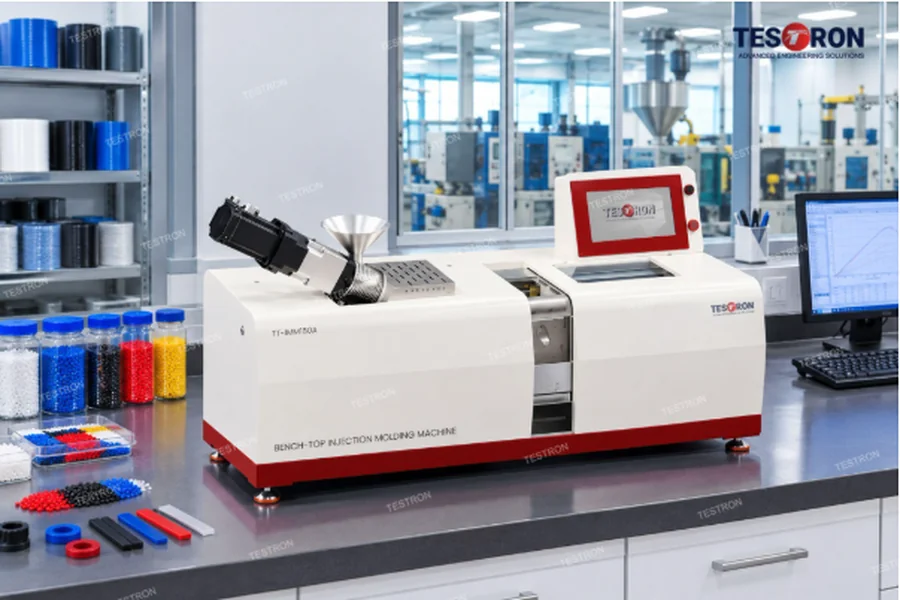
That’s why a benchtop injection molding machine in the USA can help product development teams in 2026. It provides a hands-on approach to creating a molded sample from a design, evaluating and making changes, then testing again before going into full scale production.
In the manufacturing world, R&D teams and engineering units can benefit from quicker feedback, resulting in more controlled, flexible and efficient development.
Why Product Development Teams Require Faster Physical Validation in 2026
Digital design tools help you to develop a product quickly, but a CAD model can’t solve every manufacturing problem. Even with larger production runs, you must still observe the performance of the part first.
See the official Manufacturing.gov Product Development Cycle resource for more context on how to take a product from design and development to market.
Physical molding trials can help you check:
- Whether the cavity fills correctly and the part releases cleanly
- Whether dimensions, fit, wall thickness and surface finish meet your needs
- Whether a selected thermoplastic behaves as expected during processing
- Whether design changes improve the finished part before production
A molded sample can be a part of the learning process and will enable you to make better decisions earlier. This continues the product development process without providing you with more valuable evidence to use when you’re scaling production.
Where Does a Benchtop Injection Molding Machine in the USA Fit Into Product Development?
A benchtop system falls in between the basic prototypes and full production molding equipment. You might have a 3D printed part to verify shape, but how does it perform in the plastic you need it to?
If you want to make that transition, a small benchtop injection molding machine can help. It can be used for sample parts, design trials, material evaluation, fit checks and limited production, without the involvement of a large production machine.
The process is clear: design, mold, check, test, adjust and mold again. Having those steps closer together allows your engineering unit to make decisions with a real part in hand.
From Prototype to Pre Production: Where Benchtop Molding Adds Value
From the drawing board to production is not a direct route in product development. Those stages can be accommodated by a benchtop injection molder and not every trial would become a full production run.
| Development Stage | What You Need to Learn | How Benchtop Molding Helps |
| Early design validation | Can the geometry be molded? | Creates a physical molded sample |
| Material trials | How will the chosen plastic behave? | Supports controlled material testing |
| Functional testing | Does the part fit and work correctly? | Provides parts for practical evaluation |
| Design refinement | What should be changed? | Makes repeated iterations easier |
| Pre-production review | Is the design ready to scale? | Helps identify issues before larger runs |
For companies evaluating a benchtop injection molding machine in the USA, the value becomes clear: you create a faster path between an engineering decision and a physical result your team can inspect.
Which USA Industries Can Use Benchtop Molding During Product Development?
Benchtop molding can support teams working with small thermoplastic components that need practical samples before production. The goal is simple: learn more about the part before committing more time and money.
An automotive team may review clips, connectors, housings or interior components. An electronics company may check enclosure fit or structural parts. Medical-device developers may need repeatable samples for design evaluation, while packaging teams may compare shapes, closures or materials. Consumer-product companies can also use molded trials to see how a product feels, fits and performs.
For these tasks, Testron Group’s benchtop plastic injection molding machine gives you a compact option for producing plastic parts and samples during evaluation.
From CAD to Molded Part: What Should a Practical Benchtop System Offer?
But a development machine ought to be capable of more than melting plastic. It should provide a degree of process control so that you can see how one trial is successful and the other is not. When changing a design or material, consistency comes in handy to help with comparisons.
Look for control over injection speed, temperature, pressure, mold handling and repeatable cycles. Easy mold installation also matters because development work often involves frequent changes.
When you compare an injection molding machine benchtop configuration with a floor-standing system, consider how often you will change molds, how much material each trial needs and how closely you need to control the process.
Testron Group’s benchtop injection molding machine offers a compact option for teams that want to bring more plastic molding trials in-house.
How to Choose the Best Benchtop Injection Molding Machine for Product Development
The best benchtop injection molding machine will be based on the size of the injection, the materials, mold, tests and expected workload.
Before you select a system, compare:
- Injection volume, clamping force, pressure and temperature range
- Maximum mold size and the molds your team expects to use
- Material compatibility and sample weight required for each trial
- Repeatability, controls, safety features and ease of operation
- Installation, training, technical support, warranty and spare parts access
You should also consider the benchtop injection molding machine manufacturer. Clear technical information can simplify setup. The same applies when choosing a benchtop injection molding machine supplier, because responsive support matters when your development schedule is tight.
Price Matters, but Product Development Value Matters More
It is natural to compare benchtop injection molding machine prices when planning an R&D purchase, but the purchase price tells only part of the story.
Your real benchtop injection molding machine cost can include molds, tooling, installation, training, maintenance, materials and even time spent waiting for trial parts that you need to be made by an outside company. A lower priced machine may even provide greater value if that machine lacks the ability to handle your particular process or mold or even your materials.
Consider your workflow when you purchase equipment for R&D. Is there a greater value to your company if that equipment allows your personnel to test their concepts, identify potential problems and reduce the need for outsourcing to others?
Turn More Product Ideas Into Testable Parts
The best product development process is the one that embraces change. It’s the one that catches the opportunity to make useful changes early, before your team has had enough time to change the design. A small molding system that enables you to get real thermoplastic parts in the hands of your engineers earlier than assumptions can help you do just that.
That could be quicker design review, greater confidence in material selection, smoother pre-production testing and better prospects for larger production runs for USA manufacturers in 2026. Test, learn, refine and move forward without using full production equipment for all early trials.
Testron Group can assess a system to address your part, material, mold and workflow needs if your team is considering product development using compact injection molding. Contact Testron Group today and discover how the right solution can help you with your next product development.
