
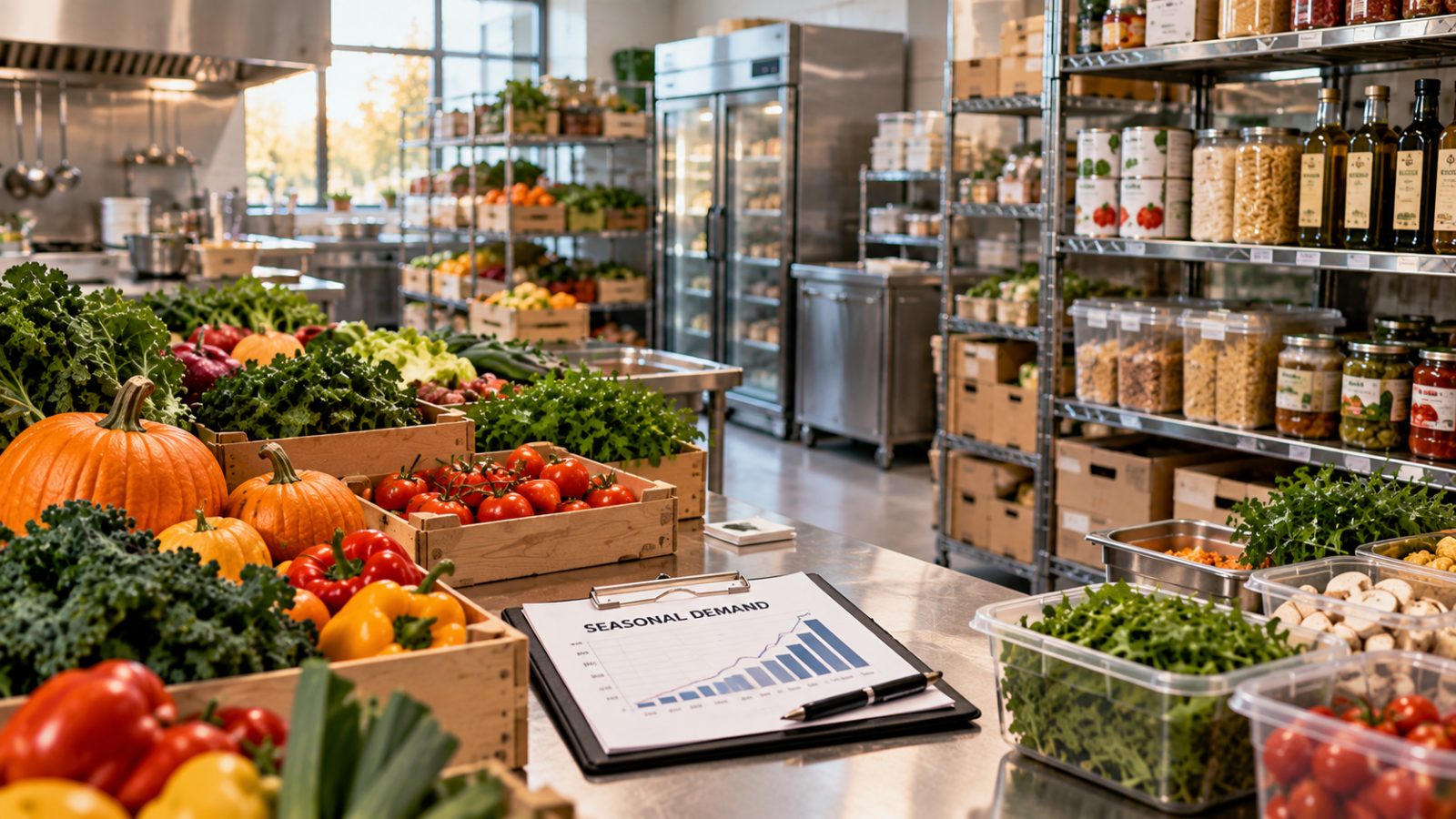
Seasonal changes can have a major impact on foodservice operations. Restaurants may experience increased traffic during holidays or tourism seasons, caterers often face periods packed with events, and schools and healthcare facilities have their own predictable changes in demand. At the same time, ingredient prices and availability can fluctuate throughout the year. Working closely with reliable food distributors can help businesses anticipate these changes, plan purchasing more accurately, and reduce the risk of costly last-minute shortages.
Seasonal planning is ultimately about preparing before demand changes rather than reacting after it happens.
Understand Your Seasonal Demand Patterns
The first step is identifying when demand typically rises or falls.
Historical sales and purchasing data can reveal useful patterns. Restaurants can compare weekly sales with the same period in previous years, while caterers can review event bookings and institutional foodservice operations can analyze meal volumes.
Seasonality can be influenced by many factors:
- holidays and celebrations;
- school calendars;
- tourism seasons;
- local festivals and sporting events;
- weather;
- wedding and catering seasons;
- changes in available produce;
- annual promotions.
Once these patterns are identified, managers can estimate how purchasing requirements are likely to change.
However, historical numbers should be treated as a starting point rather than an exact forecast. Current reservations, bookings, local events, menu changes, and recent sales trends should also be considered.
Identify Your Most Critical Products
Not every product requires the same level of planning.
Businesses should identify ingredients and supplies that would cause the greatest disruption if they became unavailable.
For a restaurant, this might include proteins used in signature dishes, cooking oils, dairy products, or specialty ingredients. A caterer may need products associated with popular event menus. Institutional kitchens may rely on specific products for planned meal cycles.
These critical items deserve additional attention before high-demand periods.
Managers can discuss expected availability with suppliers, confirm lead times, and determine whether acceptable alternatives exist.
Having an alternative identified in advance is much easier than searching for one when a product is already out of stock.
Adjust Inventory Without Overordering
Preparing for increased demand does not mean filling every storage area with extra inventory.
Overordering can create its own costs, particularly for perishable products.
The objective is to increase inventory strategically.
Shelf-stable products with predictable demand may be suitable for earlier purchasing. Fresh produce, meat, seafood, dairy, and other perishable products usually require more careful coordination with delivery schedules.
Businesses should consider storage capacity as well.
Ordering significantly more frozen or refrigerated food than normal can create problems if coolers and freezers do not have sufficient space.
Instead of placing one unusually large order, businesses may benefit from coordinating more appropriate replenishment with their distributor.
Plan for Seasonal Price Changes
Availability is only one seasonal concern. Prices can also fluctuate.
Agricultural products are particularly sensitive to growing seasons, weather conditions, transportation, and regional availability. Meat, seafood, dairy, oils, and other categories can experience market changes as well.
Restaurants should account for these fluctuations when planning menus.
If an ingredient becomes substantially more expensive during a particular season, operators may consider adjusting portions, using alternative products, introducing seasonal dishes, or temporarily changing menu emphasis.
This is where supplier communication can provide value.
Information about changing availability and potential substitutes can help businesses make purchasing decisions before higher costs significantly affect margins.
Communicate Upcoming Demand Early
Distributors can support customers more effectively when they understand what is coming.
A caterer preparing for several large events should not wait until the normal ordering deadline to mention a significant increase in volume. Restaurants planning holiday promotions or special menus should communicate expected requirements in advance.
The same principle applies to schools, healthcare facilities, and other institutional foodservice operations.
Early communication gives suppliers more opportunity to confirm product availability or identify alternatives.
It also reduces the likelihood of placing unusually large orders at the last minute and discovering that important products are unavailable.
Seasonal supply planning should therefore be collaborative.
Businesses forecast expected needs, while distributors provide information about products, lead times, delivery schedules, and possible supply constraints.
Prepare Alternatives Before Shortages Occur
Even good planning cannot prevent every supply disruption.
Weather, transportation problems, manufacturing delays, and sudden changes in demand can all affect availability.
Businesses should therefore have alternatives for their most important products.
A substitute does not necessarily need to be identical, but it should work within the operation.
Consider whether the alternative has similar:
- quality;
- pack size;
- preparation requirements;
- yield;
- portion size;
- cost;
- menu application.
Restaurants should be particularly careful when substitutions could affect allergens, recipes, or information communicated to customers.
Identifying alternatives in advance gives kitchen teams time to evaluate them rather than making rushed decisions during service.
Review Delivery Schedules Around Holidays
Holiday periods can affect both customer demand and distribution schedules.
Businesses should confirm ordering deadlines and delivery days well in advance.
A normal delivery day may change because of a holiday, and missing an adjusted cutoff can leave an operation without sufficient inventory for several days.
Managers should also consider staffing.
If a delivery arrives during a particularly busy period, the business still needs employees available to receive, inspect, and store products correctly.
A simple calendar containing major holidays, anticipated demand peaks, order deadlines, and delivery changes can prevent many avoidable problems.
Learn From Each Seasonal Period
After a major holiday or busy season ends, review what happened.
Did the business overorder certain products? Which ingredients ran out? Were emergency purchases required? Were there unexpected increases in waste? Did suppliers meet expected delivery schedules?
These observations can improve planning for the following year.
Businesses do not need sophisticated forecasting software to benefit from this process. Even basic records of sales, purchasing, waste, and shortages can make future estimates more accurate.
Over time, seasonal purchasing becomes less reactive because managers have increasingly useful data to guide decisions.
Build a More Flexible Seasonal Supply Strategy
Seasonal demand will never be completely predictable. The goal is to create enough flexibility to respond without disrupting operations or unnecessarily increasing inventory.
For foodservice businesses in Ohio, Atlantic Food Distributors offers a regional distribution option serving restaurants, schools, healthcare facilities, and other foodservice operations throughout the state. The company provides thousands of products across major foodservice categories and has served the industry since 1960.
Businesses preparing for seasonal changes or looking to establish a more dependable supply relationship can Become a customer Atlantic Food Distributors and explore available distribution services.
Effective seasonal planning combines forecasting, inventory management, supplier communication, and flexibility. Businesses that prepare early can respond to changing demand with fewer emergency purchases, fewer shortages, and greater control over food costs.
