
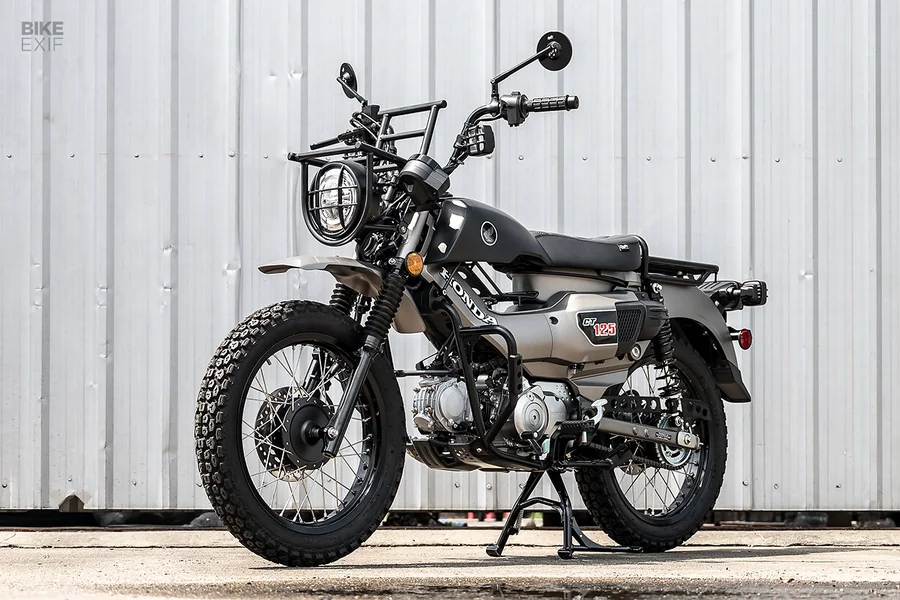
The Honda CT125 is easy to like in stock form. It is small, simple, and ready to ride the moment you swing a leg over it. I have owned mine for several years, and it has handled short commutes, back roads, weekend rides, camping trips, and the occasional light trail. After enough miles, though, a few small limitations start to show, especially once you want to carry more than a jacket and a lunch.
My bike was never finished in one build. The setup came together slowly, through trial and error. I have basic mechanical experience and can handle bolt-on parts like racks, bags, guards, and footrests, but I am no professional mechanic. Early on, I chose most things based on how they looked and what people recommended online. It took a while to learn which upgrades earned their place and which ones just made the bike look busy.
The First Upgrades Were Mostly About Carrying More
The first real limitation was storage. The CT125 has very little carrying space from the factory, which is fine for a quick commute but gets tight fast once camping gear or a weekend’s worth of clothes enters the picture.
So my earliest purchases were all about luggage. KEMIMOTO’s CT125 collection lists a center bag and a center storage rack for the CT125, Trail 125, and Hunter Cub (2021 to 2024), along with a rear storage rack and a side luggage rack. I tried a few of these over time, and the first lesson was that how quickly I could reach my gear mattered more than how much the bike could hold.
The center bag ended up being the one I used most. It sits near the middle of the bike, so everyday items like a rain jacket, a few tools, and gloves are easy to grab without stopping and unstrapping anything. Rear and side racks made more sense for things I did not need during the ride, like a sleeping bag or camp cookware.
Mounting space was the other thing I underestimated. Racks and bags compete for the same attachment points, and one accessory can easily block another. These days I ask a simple question before buying anything: what will this get in the way of?
I also had to be honest about how much I really needed to carry. Early on, I packed far too much. Eventually I started laying everything out on the garage floor and cutting the pile in half.
Why More Storage Wasn’t Always Better
For a while, I figured that if I had the room, I should use it. At one point the bike carried a center bag, a rear rack, and a large tail bag all at once. It did not go the way I expected.
The first problem was bulk. A bike that is meant to be compact suddenly felt wide and awkward, and narrow trails became more of a hassle. The second was access. With several bags stacked together, getting to something at the bottom meant unloading everything above it. The third was weight. More space meant more stuff, and the bike felt different with that extra load on it.
The collection does list a good range of luggage, including a 30L expandable tail bag with a waterproof cover, a 50L waterproof tail bag, a 40L sissy bar bag, and several helmet backpacks. Bags like these have their place on longer trips. My takeaway was simply that a bigger bag is not automatically a better one.
I eventually settled on something simpler: the center bag for daily use, and a tail bag only when a trip calls for it. Most of the time the bike stays lighter and cleaner, and the accessories rarely interfere with each other. For me, matching the setup to the ride has worked better than leaving it fully loaded all the time.
Protection Started to Matter Away From Pavement
As I started riding more gravel, visiting campsites, and trying the occasional light trail, protective parts began to make more sense.
According to the reference page, the CT125 is designed for paved roads and light off-road terrain, and its compact size and high-mounted exhaust fit that role. That matches my experience. It handles those conditions well, but loose stones, rough patches, and the occasional low-speed tip-over still happen.
I added an engine guard, and the collection lists one for the CT125 and Trail 125 (2020 to 2024). For me it is more of a layer of reassurance than anything else, something that gives the engine area some protection if the bike goes down or gets bumped while parked. I also noticed a metal exhaust heat shield guard cover for the CT125 in the same collection. Once bags and racks go on, luggage sits closer to the exhaust, so heat and clearance deserve some thought.
I want to be realistic here. Adding protection does not turn a CT125 into a heavy-duty off-road machine. It is still a small, light motorcycle, and some terrain is simply beyond it. What guards do is reduce the cost of small mistakes during ordinary riding. They are not a reason to chase harder trails.
Passenger and Everyday Convenience Changed the Setup
The longer I owned the bike, the more I noticed that quiet convenience upgrades did more for daily use than anything cosmetic.
Passenger footrests are a good example. The collection lists rear passenger footrests for the CT125 and Trail 125, and the page notes that upgraded foot pegs are a popular change for riders who want better grip and support. When I carry a passenger, or just want a more comfortable setup in the back, they make a real difference. I do not use them every day, but when I need them, nothing else will do. The collection also mentions passenger seat pads, which are worth a look for anyone who rides two-up regularly.
Easy access follows the same logic. A good accessory is one you use without thinking about it. If a bag sits in a convenient spot and opens quickly, I use it all the time. If I have to take things apart to reach it, I stop bothering, and it turns into dead weight.
None of these changes make the bike look more custom, but over months and years they have shaped how I use it far more than any visual modification. Here is a quick summary of what each area taught me.
| Upgrade Area | What It Helped With | What the Owner Learned |
| Center Storage | Small daily items | Easy access mattered more than capacity |
| Rear / Side Racks | Longer trips | More mounting space also adds bulk |
| Tail Bags | Flexible luggage | Size should match the actual trip |
| Passenger Footrests | Two-up use | Passenger space needs to be planned early |
| Protection | Rough roads and light trails | Protection should match actual terrain |
What I Look for Before Buying CT125 Parts Now
After a few mistakes, I run through a fairly consistent checklist before I buy anything.
Model-year fitment comes first. Product names in the collection spell out the years each part fits, such as 2020 to 2024 or 2021 to 2024, and those ranges are not identical across accessories. I confirm my own year, then check whether the part matches. Next I look at mounting points and whether the part will clash with anything already on the bike.
After that, I think about compatibility with my current racks and bags, clearance around the exhaust, space for a passenger, and weight. One more factor I used to overlook is how easy something is to remove. If an accessory is a pain to take off, I am less likely to want it on the bike. Finally, there is the question that matters most: does this solve a problem I run into again and again?
When I compare options, I like to look at the full Honda CT125 collection together, checking model years and mounting positions side by side to see whether several parts can live on the same bike. It is much easier to catch conflicts that way than by looking at one item at a time.
Upgrades I Would Prioritize Differently Today
If I were starting over, I would do things in a different order. My original order was almost the reverse: looks first, other people’s recommendations second, practicality last. Today it would look more like this:
- Storage needed for daily use
- Protection for the roads I actually ride
- Passenger or comfort upgrades
- Additional luggage for longer trips
- Cosmetic modifications
Storage comes first because it solves a problem on every ride. Protection comes next, but only as much as my usual roads call for. Passenger and comfort changes depend on how often the bike carries two, so they sit in the middle. Extra luggage is something I add when a trip needs it, and cosmetic changes come last because they rarely change how usable the bike is.
This order is not universal. Someone who mostly commutes in the city will have different priorities from someone who camps every other weekend. The point is to figure out your own riding habits first.
When I do my research, I also try to look beyond the bike itself. Browsing the KEMIMOTO website shows how much else is out there, and the CT125 page also lists riding gear such as boots, gloves, jeans, and a rain suit. It helps me think about the bike and the rider together instead of focusing on parts alone.
Conclusion
Looking back, the best Honda CT125 build does not need the largest number of accessories. The upgrades that worked were the ones that kept the bike simple while making it more useful for how I actually ride.
For me, that means a compact center bag, protection chosen for the roads I really use, passenger parts for when I need them, and extra luggage only on trips that call for it. The rest I would rather leave off. A bike that is simple, handy, and easy to live with gets ridden more than one that is loaded down.
