
Builders hit this wall, pun intended, all the time. The insulation needs to perform better, but the wall cannot get any thicker. Lot lines are maxed out. Interior floor space is sacred. The architect already submitted drawings, and nobody wants to hear that every exterior wall needs another half inch tacked on. That kind of change cascades through a project fast. So what do you do when the wall depth is locked but the thermal target keeps climbing?
A Quick Word on R-Value
The R-value is just a measure of how hard it is for heat to push through a material. A bigger number means better insulation. A product that has an R-value of 5 per inch blocks twice as much heat as one with an R-value of 2.5 in the same space. When space is tight, the gap between materials becomes crucial. Old-school insulation hits its limits pretty fast. Want more thermal resistance? Add more inches. More inches mean fatter walls. Fatter walls steal square footage from rooms or push the building envelope past where it is supposed to stop. Nobody wins.
Graphite Flips the Equation
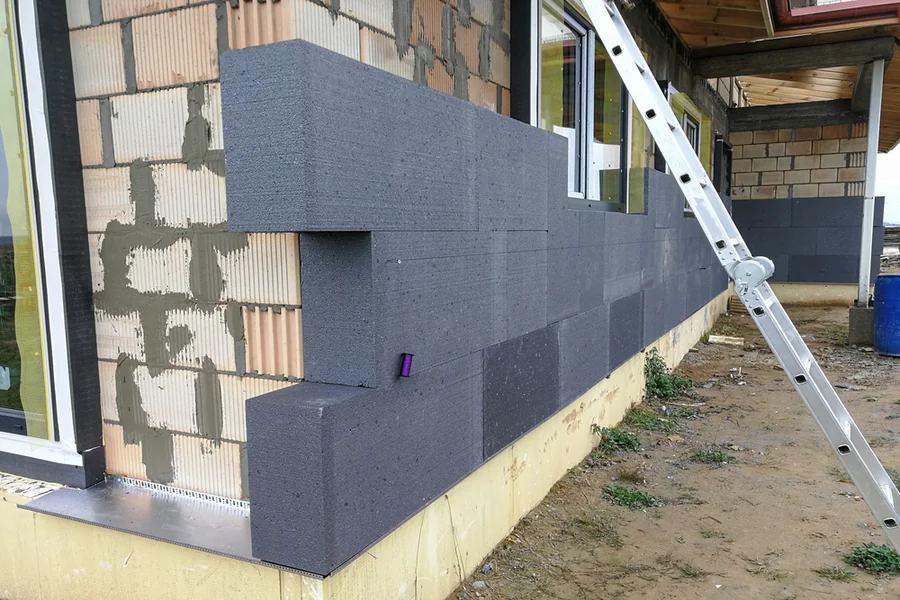
Here is where things get interesting. Regular expanded polystyrene foam provides effective insulation. Small air pockets within the cellular structure slow down heat as it attempts to move through. Including graphite particles in the mixture advances that significantly. The graphite sends radiant heat energy back through the foam, much like small mirrors reflecting warmth before it passes completely through. Same thickness. Meaningfully higher R-value. Or look at it from the other direction. The same R-value achieved with a thinner slab of material. Each of these outcomes offers designers and builders opportunities that they would not otherwise receive.
Real Situations Where This Comes Up
Cold storage warehouses are a classic case. Every inch of wall insulation shrinks the storage footprint inside, and in a business where volume equals revenue, that matters. Residential construction in cold-weather states runs into it too. Energy codes keep ratcheting upward, but the houses going up on tight suburban lots cannot just balloon outward to compensate. Retrofits are probably the trickiest. Older buildings have wall cavities framed for a different era. Removing everything and rebuilding is costly and causes disruption. A thinner insulation material that performs better than the original solves the issue without the hassle of demolition.
The Foam Itself Has to Deliver
This particular part tends to be ignored more often than it should be. Two EPS panels might appear the same on a shelf. Nevertheless, they behave quite differently after installation. The bead quality, foam density, and manufacturing precision of each panel determine whether the R-value stated on the data sheet is actually reflected in the finished wall.
Companies like Epsilyte manufacture EPS products with high R-values. These are built for exactly these tight-space situations. Their graphite-enhanced DuraLyte line squeezes more insulating power into a thinner profile than conventional EPS. This gives project teams real flexibility when wall cavities are shallow and performance specs are aggressive. Their manufacturing process remains consistent, so they deliver to the job site exactly what they promised on paper. That kind of predictability tends to matter a lot once a project is underway.
Conclusion
Energy codes are only moving in one direction. Urban lots are getting tighter. Renovation budgets almost never include room for ripping out framing and starting fresh. The pressure to get better thermal numbers out of thinner assemblies is not going to let up anytime soon. The necessary materials to make this happen are already available. Thinner wall. Stronger thermal barrier. No tradeoff required.
