
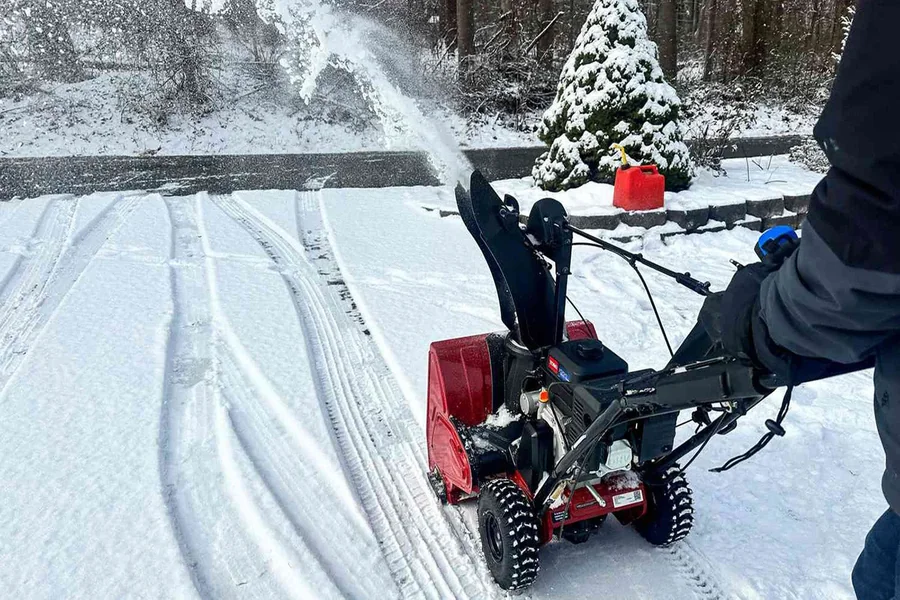
The first major snowfall of the season has a way of exposing weaknesses in your snow removal routine. A shovel may be enough for a light dusting, but clearing a long driveway or multiple walkways after several inches of snow quickly becomes exhausting. That’s why more homeowners are turning to an electric snow blower for faster, quieter, and less physically demanding snow removal.
After more than 15 years of evaluating outdoor power equipment in regions with harsh winters, I’ve seen electric snow blowers evolve from lightweight alternatives into capable machines that handle many residential snow-clearing needs with ease. If you’re considering an electric snow blower, understanding the features that affect real-world performance will help you choose a model that works efficiently throughout the winter season.
This guide explains what to look for before buying an electric snow blower, from clearing width and battery runtime to maneuverability and safety features.
Why Electric Snow Blowers Are Becoming the Preferred Choice for Homeowners
Battery-powered and corded electric snow blowers have become increasingly popular because they eliminate many of the inconveniences associated with gas-powered equipment.
Key advantages include:
- Push-button starting
- Lower maintenance requirements
- Quieter operation
- No gasoline or oil changes
- Reduced vibration
- Zero direct exhaust emissions during operation
For homeowners with standard residential driveways and sidewalks, these benefits often outweigh the extra power offered by larger gas models.
Match the Snow Blower to Your Driveway and Walkway Size
One of the biggest purchasing mistakes is choosing a snow blower that’s either too small or unnecessarily large for your property.
Short Driveways and Sidewalks
Compact electric snow blowers are ideal for:
- Townhomes
- Small residential driveways
- Patios
- Walkways
- Decks
Their lighter weight makes them easier to maneuver in tight spaces.
Medium Residential Driveways
Most homeowners benefit from machines offering wider clearing paths and greater throwing distance, reducing the number of passes required.
Large Driveways and Corner Lots
For longer driveways or properties that receive frequent snowfall, choose a model with higher battery capacity, a larger intake width, and sufficient throwing power to keep snow from piling back onto cleared surfaces.
Clearing Width and Intake Height Matter More Than You Think
The size of the intake determines how efficiently a snow blower removes snow.
As a general guideline:
- 18–20 inches: Best for sidewalks and compact driveways.
- 20–22 inches: Suitable for average suburban properties.
- 24 inches or more: Ideal for larger residential driveways and heavier snowfalls.
A wider clearing path reduces the total number of passes, saving both time and battery power.
Battery Runtime Is More Important Than Maximum Voltage
Many shoppers focus on voltage, but runtime depends on several factors, including battery capacity, snow depth, temperature, and snow density.
For example, clearing six inches of dry powder requires far less energy than moving heavy, wet snow after a freezing rain.
When comparing models, evaluate:
- Battery amp-hour (Ah) capacity
- Estimated runtime
- Recharge time
- Availability of spare batteries
- Compatibility with other outdoor power tools
For larger properties, owning an extra battery can be more valuable than simply choosing the highest-voltage system.
Throwing Distance and Adjustable Chutes Improve Efficiency
A powerful auger is only part of the equation. The ability to direct snow where you want it also matters.
Look for features such as:
- Adjustable discharge chute
- Rotating chute controls
- Variable throwing distance
- Deflector adjustments
- Easy-to-operate controls with gloves
Being able to precisely place snow prevents repeated cleanup and keeps cleared areas from becoming obstructed after additional snowfall.
Single-Stage vs. Two-Stage Electric Snow Blowers
Choosing the right design depends on local winter conditions.
| Feature | Single-Stage Electric Snow Blower | Two-Stage Electric Snow Blower |
| Best For | Light to moderate snowfall | Heavy snowfall and larger driveways |
| Weight | Lighter | Heavier |
| Maneuverability | Excellent | Good |
| Snow Depth | Up to moderate accumulations | Deep, dense snow |
| Maintenance | Low | Moderate |
Most suburban homeowners with average snowfall find that a quality single-stage electric snow blower provides the ideal balance of convenience and performance.
Essential Features That Improve Everyday Operation
Beyond motor power, several features significantly improve usability during winter.
Prioritize models with:
- Brushless motor technology
- LED headlights
- Ergonomic handle design
- Foldable storage handles
- Variable speed control
- Durable auger construction
- Tool-free adjustments
These features reduce operator fatigue and make snow removal more comfortable during early mornings or evening storms.
A Five-Step Process for Choosing the Right Electric Snow Blower
If you’re comparing multiple models, follow this simple decision-making framework.
- Measure the total area you’ll clear after each snowfall.
- Estimate your area’s average snowfall depth.
- Choose an appropriate clearing width.
- Compare realistic battery runtime instead of voltage alone.
- Consider battery compatibility with your other outdoor equipment.
This approach helps you invest in equipment that fits your actual winter maintenance needs.
Common Buying Mistakes Homeowners Should Avoid
After years of testing snow removal equipment, I’ve noticed several recurring mistakes.
Avoid these pitfalls:
- Buying based solely on motor power.
- Choosing a clearing width that’s too narrow.
- Ignoring battery runtime.
- Underestimating snow density.
- Waiting until the first storm to learn the controls.
- Forgetting to maintain batteries during the off-season.
Proper planning often has a greater impact on winter performance than purchasing the largest available machine.
Expert Tips for Better Snow Removal and Longer Equipment Life
Following a few best practices can improve efficiency while extending your snow blower’s lifespan.
- Clear snow as soon as possible after it falls.
- Remove heavy accumulations in multiple passes if necessary.
- Store batteries indoors in moderate temperatures.
- Brush snow from the machine before storage.
- Inspect the auger after each use.
- Recharge batteries before extended storage periods.
Routine care helps maintain consistent performance throughout the winter.
Trusted Resources for Snow Removal Safety
For additional guidance on winter weather preparedness and equipment safety, consult these trusted organizations:
- National Weather Service (NWS): https://www.weather.gov
- Occupational Safety and Health Administration (OSHA): https://www.osha.gov
These organizations provide valuable recommendations on winter safety, cold-weather preparedness, and safe operation of outdoor equipment.
Frequently Asked Questions
Are electric snow blowers powerful enough for heavy snow?
Many modern electric snow blowers can handle moderate to heavy residential snowfall, especially when equipped with brushless motors and high-capacity battery systems. Extremely deep or compacted snow may require multiple passes.
What size electric snow blower is best for an average driveway?
A model with a 20- to 22-inch clearing width is suitable for most suburban driveways and walkways, offering a good balance between maneuverability and productivity.
How long does the battery last on an electric snow blower?
Battery runtime depends on snow conditions, battery capacity, and machine size. Many homeowners can clear a standard driveway and sidewalks on a single charge under average conditions.
Is a brushless motor worth the additional investment?
Yes. Brushless motors improve efficiency, extend battery runtime, reduce maintenance, and provide more consistent power under varying snow conditions.
Can an electric snow blower replace a gas model?
For most residential properties, modern electric snow blowers provide excellent performance while requiring significantly less maintenance. Homeowners in areas with frequent, extremely heavy snowfall may still benefit from larger two-stage models.
Final Thoughts
Choosing the right electric snow blower is about more than selecting the highest voltage or widest clearing path. The best machine matches your property’s size, the type of snowfall you typically receive, and your preference for easy operation and minimal maintenance.
By focusing on clearing width, battery runtime, throwing distance, maneuverability, and safety features, you’ll invest in equipment that makes winter snow removal faster, safer, and far less physically demanding. A thoughtfully selected electric snow blower can provide reliable performance for many winters while helping you keep driveways and walkways clear with minimal effort.
