
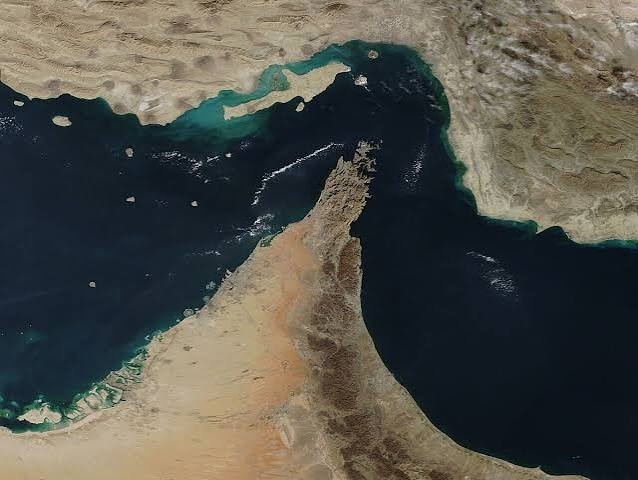
Since the Iran war began in February 2026, one question has dominated energy markets across the Gulf: how do you keep oil flowing when the region’s most important shipping chokepoint is no longer reliable? The answer taking shape right now involves a major infrastructure decision, and reports of a possible Saudi oil pipeline expansion have become one of the clearest signals of how seriously Gulf states are treating that risk.
The Pipeline at the Center of the Story
Saudi Arabia’s East-West pipeline, built in the early 1980s, was originally designed as a backup route, but it has become central to the kingdom’s export strategy since fighting closed off reliable passage through the Strait of Hormuz. According to sources close to the matter, the pipeline can currently move up to 7 million barrels per day of crude to the Red Sea port of Yanbu, with roughly 2 million bpd feeding refineries along the west coast and about 5 million bpd going toward export.
What the Expansion Would Actually Add
- Up to 2 million additional barrels per day of pipeline capacity, according to sources familiar with the preliminary talks
- Possibly a smaller second pipe dedicated specifically to refined oil products, rather than crude alone
- An unclear mix of upgrading existing infrastructure versus building entirely new pipeline sections
The kingdom is reportedly in early discussions with neighboring countries about sharing in that expanded capacity, since several Gulf states currently have no meaningful way to move oil without passing through Hormuz at all.
Why This Matters So Much Right Now
The Countries Left Most Exposed
| Country | Current Hormuz-Bypass Situation |
| Kuwait | No independent bypass route currently available |
| Bahrain | No independent bypass route; refinery has been directly targeted |
| Qatar | Limited alternatives; mainly LNG-focused, facing technical hurdles |
| Iraq | Pipeline to Turkiye running well below capacity due to disputes and shutdowns |
| UAE | Only Gulf state with meaningful existing bypass capacity |
Kuwait Petroleum Corporation’s CEO, Sheikh Nawaf Al-Sabah, confirmed at last month’s Atlantic Council Global Energy Forum that Kuwait is already in discussions with Saudi Arabia and the UAE about expanding pipeline systems to accommodate Kuwaiti barrels specifically, since Kuwait has no independent route of its own.
How the War Has Already Reshaped Oil Flows
Understanding how oil prices in the Middle East have moved since February requires looking at just how much production has already been disrupted. Iran’s blockade of the strait forced Gulf producers to shut in as much as 12 million barrels per day at the conflict’s peak, sending prices surging sharply during that period.
The Damage in Numbers
- Iraq: output collapsed from 4.3 million bpd down to less than 1.5 million bpd by May
- Kuwait: declared force majeure on exports in March
- Bahrain: the Sitra refinery was struck by Iranian missiles on several separate occasions
A preliminary US-Iran deal reached last month has allowed flows to resume partially, though volumes remain below pre-war levels, meaning the disruption hasn’t fully unwound even with a truce in place.
The Bigger Strategic Picture
The UAE isn’t standing still either. It has already completed roughly half of a new West-East pipeline that will double its crude capacity to Fujairah once operational next year, adding to its existing Abu Dhabi pipeline, which already carries up to 1.8 million bpd. According to Zaid Belbagi, managing partner at Hardcastle Advisory, the recent wave of pipeline talks involving Saudi Arabia, Kuwait, and Qatar reflects a broader realization across the region about the risks of depending solely on Hormuz.
Some industry sources go further, suggesting that a Saudi pipeline expansion could set off the next phase of Saudi-UAE competition: a race to boost production capacity that could ultimately push prices down as both countries compete for the same export markets.
What to Watch Going Forward
- Whether Saudi Arabia opts to upgrade existing infrastructure or builds a completely new pipeline
- How quickly Kuwait, Bahrain, and Qatar manage to secure their own bypass arrangements
- Whether the UAE’s Fujairah pipeline expansion comes online on schedule next year
In the End
The scramble to build reliable alternatives to the Strait of Hormuz shows just how much the Iran war has permanently changed Gulf energy strategy, regardless of how the conflict itself eventually resolves. Do you think these new pipeline routes will meaningfully reduce the region’s vulnerability, or simply shift where the next bottleneck appears?
