
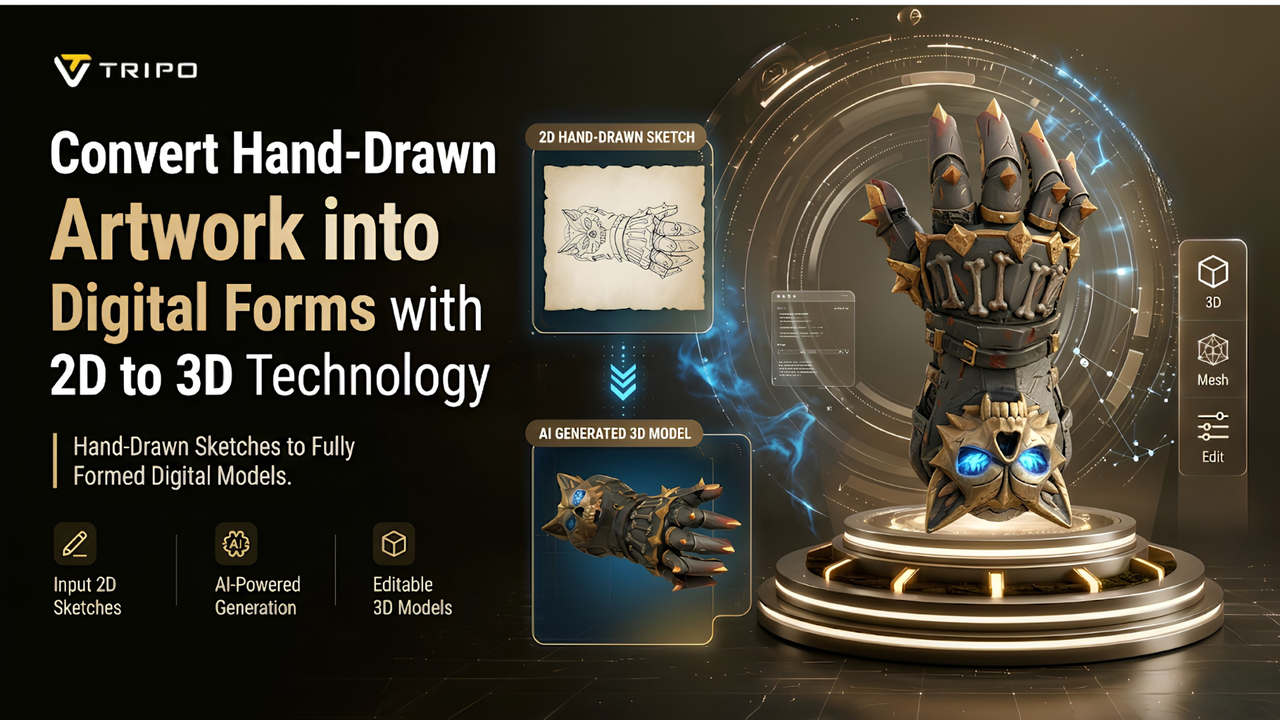
Artists are looking for digital means to take their creative ideas beyond paper. Art is now drawn by hand and used as a base to create assets that are dimensional. Advanced AI systems can analyze sketches and reconstruct depth, structure, and form. Tripo 3D is a tool that converts drawings into basic models that can be further edited. It is a process that helps develop concepts, visualization, and digital content creation. From character sketches to product concepts, artists can turn flat drawings into structured workflows and create editable 3D assets.
Understanding Sketch-Based 2D to 3D Conversion
Sketch-based conversion involves analyzing flat artwork to create 3D geometry. The first step in AI is to recognize the visible lines, contours, and structural features. Advanced recognition systems identify shapes and estimate depth relationships. Contour extraction techniques emphasize the contours that are important to the rest of the information. Volume prediction algorithms use partial visual data to estimate volume. Reconstruction algorithms then use the analyzed sketch to generate coherent geometry. Modern 2d to 3d systems can preserve proportions and generate editable assets. Tripo 3D uses these methods to create structured geometry from sketches and art references.
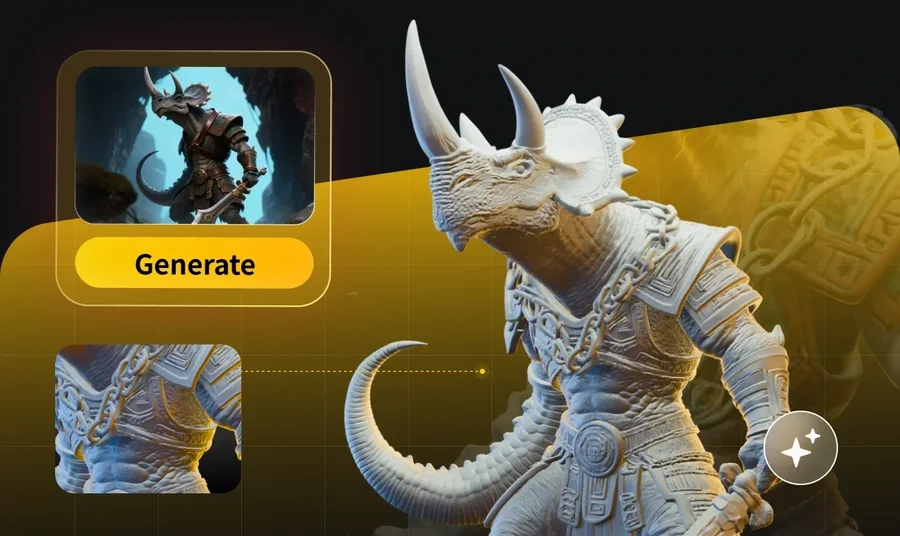
How AI Reads Hand-Drawn Artwork
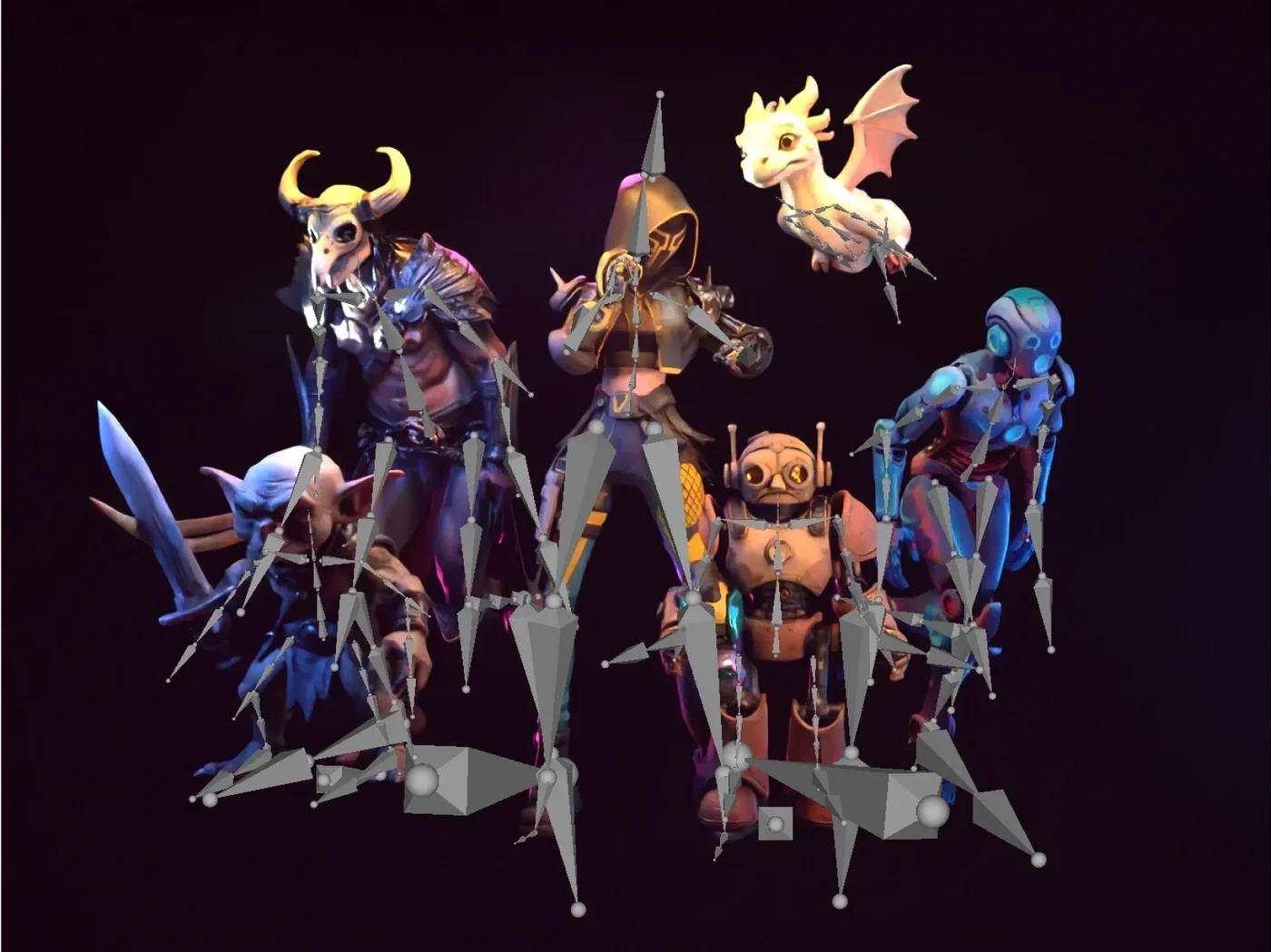
AI interprets artwork through a sequence of visual analysis steps. Line recognition methods are used to detect edges, sketch boundaries, and sketch strokes. Shape interpretation systems classify image regions into meaningful forms. Contour extraction methods emphasize shape boundaries rather than fine details. Estimating depth through spatial relationships is part of the prediction process. Structure reconstruction logic converts inferred dimensions into 3D forms. Tripo 3D processes these visual cues to generate a model based on the original artwork. The platform also includes texturing, animation preparation, and auto rigging features.
Why Hand-Drawn Artwork Works for the 3D Generation
Hand-drawn artwork can provide useful information for dimensional reconstruction. Sketches are often simple and can effectively convey creative ideas. Illustrations provide guidance for shape interpretation and volume estimation. Artists can use drawing techniques to define proportions directly. Visual characteristics can remain during reconstruction, allowing stylized designs to stay recognizable. Using original sketches can help preserve the concept during the modeling process. Tripo 3D interprets these tools of art and transforms them into structured geometry for refinement and editing.
Preserving Artistic Identity During Conversion
It is important to keep the artist’s identity throughout the sketch reconstruction. Original forms reflect the creator’s visual language and design choices. Tripo 3D aims to maintain the important contours and structures. When geometry closely resembles the original artwork, visual themes can still be identified. Illustrations can include stylized geometry and non-realistic proportions. Maintaining the original proportions also helps preserve overall design balance. After conversion, styles such as flat or exaggerated shapes and unique silhouettes can be retained. This approach helps artists maintain the original character of their work during digitization.
Steps to Convert Hand-Drawn Artwork into Digital Forms with 2D to 3D Technology
Step 1: Bring Your Sketch into the Platform
- First, you need to access Tripo 3D and signup. Next, go to the “Model” tab present in the vertical left menu bar.
- Under the menu, click on the “HD Model”.
- You can drag and drop to upload the image, or you can also upload the image from a specific location of your device using the “Upload” tab.
Step 2: Set Up the Model Generation Options
- Under the “General settings” tab, you can either allow the AI to completely generate on its own by switching “AI complete”. Or you can turn on texture and select the custom “Texture Quality” like 2K, 4K, or 8K.
- You can also turn on “PBR” for accurate material reflective properties.
- For better topology characteristics, select either “Quad” or “Triangle” topology.
- You can also set the custom polycount.
- Later choose the model from the list, including v3.1 best quality, v3.0 fast and balanced, or v2.5 legacy.
- If you are a member, then you can choose “Generate in Parts”, “8K Texture”, and “Privacy” options.
- Finally, click on the “Generate Model” to begin generation.
Step 3: Polish the Artwork and Export the Model
- Tripo 3D allows you to completely view your model in the style you want. Key styles include “Solid View”, “Cartoon Style”, “Sketch Style”, “Hologram Style”, and “Unlit” form. You can also “Refine” your design right through the bottom menu.
- You can also edit the “Environment Settings” and camera settings through “Reset Camera”.
- If you want, you can 3D print the design you want, or you can also share directly by clicking “3D Print”.
- In the end, click on the “Export” tab from the bottom menu. Next, choose the resolution, format, and filename, and click again on “Export” to save the design to your local device.
Input Preparation Tips for Better Sketch Conversion
Input quality directly influences reconstruction accuracy and model clarity. Draw neatly with sharp outlines and shapes. Avoid excessive clutter that may interfere with interpretation systems. High contrast is useful for AI to detect significant contours and object edges. Maintain the main subject in the frame of the picture. Higher image resolution provides more visual data for analysis. Organized sketches generally result in smoother and more consistent geometry. Tripo 3D supports many input types, and clearer artwork often improves results.
Advantages of Converting Artwork into Digital 3D Forms
Digital conversion is influencing many industries and creative disciplines. Artists can visualize concepts without manually creating models from scratch. Editable assets enable you to experiment, iterate, and improve designs. Tripo 3D can help streamline creative workflows by reducing reconstruction effort. Generated models can be used for visualization, animation, product development, or printing. This process also supports the exploration of multiple design directions. The platform supports exports for various software tools and content pipelines. Sketches can serve as useful starting points for larger digital projects.
Artwork Types Suitable for Tripo 3D Reconstruction
Compatible Artistic Inputs
- Character Sketches – Create distinct visual personalities and character geometry for further modification.
- Creature Concepts – Explore imaginative forms that can be used in stylized design projects.
- Product Concepts – Transform visual ideas into 3D models for concept exploration.
- Mechanical Drawings – Support structured reconstruction and organized geometry development.
- Fantasy Illustrations – Preserve artistic styling while creating imaginative designs.
- Object Sketches – Support efficient digital conversion while maintaining recognizable proportions.
Exporting and Refining Generated Artwork Models
Reconstructed models can be refined further after generation. Geometry can be adjusted for structural stability and visual consistency. Texture and material adjustments can align results with creative goals. Tripo 3D can be easily exported to fit in existing creative workflows. Assets can be prepared for visualization, animation, and presentation. Geometry can also be further modified using external software applications. Many creators combine generated assets with existing projects or free 3d models libraries. This versatility supports the creation of resources suited to different creative needs.
Conclusion
Sketch-to-3D conversion provides an efficient way to transform artistic drawings into digital 3D resources. The process involves AI analysis, depth estimation, and geometry reconstruction. Preserving artistic intent is important throughout the conversion process, and Tripo 3D helps maintain visual identity while creating editable models from sketches. Artists can explore ideas more quickly and experiment with new design approaches. As AI-driven modeling evolves, hand-drawn artwork continues to play an important role in digital content creation workflows.
