
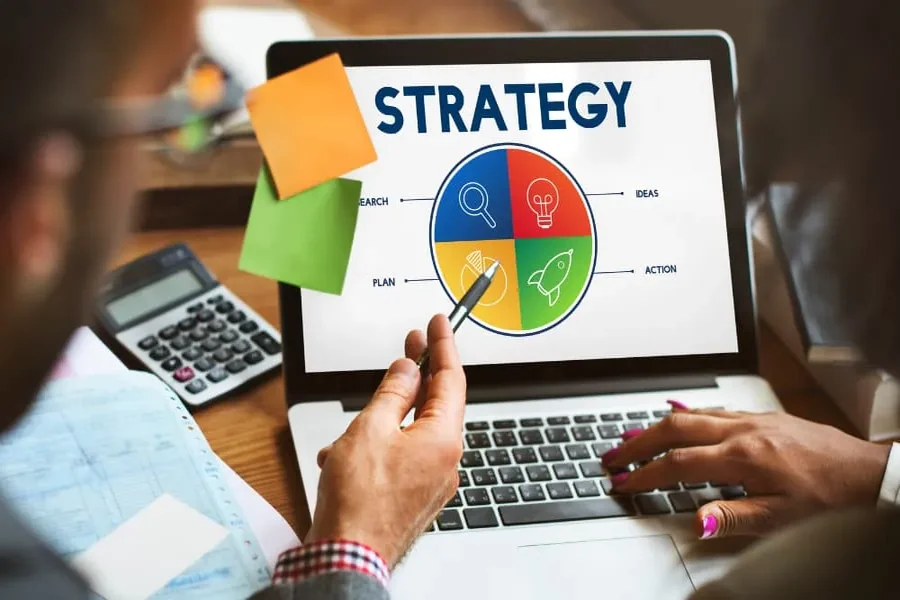
Strategy sits at the center of how businesses operate, grow, and survive in competitive environments. While day-to-day tasks keep an organization moving, strategy determines where it is headed and why. It shapes decisions long before results are visible and continues to influence outcomes even as conditions change. In the business world, strategy is not a luxury reserved for large corporations. It is a practical framework used by organizations of all sizes to align effort, manage risk, and pursue opportunity with intention.
At its most effective, strategy provides direction without rigidity. It helps businesses prioritize what matters most while remaining adaptable enough to respond to shifting markets, technologies, and customer expectations.
What Strategy Means in a Business Context
In business, strategy is about making deliberate choices. Companies face constant trade-offs involving time, money, talent, and focus. Strategy clarifies how those resources should be allocated to support long-term goals. It answers fundamental questions such as who the business serves, what value it delivers, and how it competes.
A strong strategy does not attempt to do everything. Instead, it defines boundaries. These boundaries help teams understand which opportunities align with the company’s purpose and which do not. When strategy is clear, decisions become more consistent and less reactive.
This clarity also improves communication. Employees across departments can understand how their work contributes to broader objectives, creating alignment and reducing internal friction.
Strategic Planning as an Ongoing Practice
Many organizations associate strategy with annual planning cycles or executive retreats. While these moments are important, strategy is most effective when treated as an ongoing practice rather than a one-time event. Markets evolve, competitors adjust, and customer behavior shifts. Strategy must be reviewed and refined to remain relevant.
Strategic planning often begins with analysis. Businesses examine internal performance, market trends, competitive dynamics, and potential risks. From there, leadership sets goals and outlines initiatives designed to move the organization forward.
The most resilient companies revisit these assumptions regularly. They use data, feedback, and results to validate or adjust their approach. Strategy becomes a living framework rather than a static document.
How Strategy Guides Decision-Making
Strategy shows its true value in everyday decisions. When faced with choices about investments, partnerships, or product direction, a clear strategy acts as a filter. Leaders can evaluate options based on whether they support long-term objectives rather than short-term convenience.
For example, a company pursuing differentiation may invest heavily in customer experience and innovation, even if it increases costs. Another company focused on efficiency may prioritize automation and process improvement. Both approaches can succeed, but only when decisions consistently reinforce the chosen path.
Without strategy, organizations risk contradiction. One initiative may push growth while another limits capacity. Over time, these mixed signals slow progress and create confusion.
Strategy Across Business Functions
Strategy is not confined to executive leadership. It influences how every function operates. Marketing strategies determine how a brand communicates and attracts attention. Sales strategies shape how relationships are built and revenue is generated. Operations strategies guide efficiency, quality, and delivery.
When strategies across functions align, the organization operates as a unified system. Marketing attracts the right audience. Sales converts them effectively. Operations deliver on promises. Customer experience reinforces trust and loyalty.
Misalignment, on the other hand, leads to wasted effort. Customers receive inconsistent messages. Teams work at cross purposes. Strategic alignment amplifies impact by ensuring that every function supports the same goals.
Adapting Strategy in a Changing Environment
Change is constant in the business world. Economic conditions shift, technology advances, and customer expectations evolve. Strategy helps organizations respond to change without losing direction.
Adaptation does not require abandoning long-term goals. Instead, it involves adjusting tactics while staying true to core principles. A company may shift channels, update offerings, or adopt new tools while maintaining its underlying value proposition.
Businesses that view strategy as flexible rather than fixed are better positioned to navigate uncertainty. They can adjust course thoughtfully rather than reacting impulsively to external pressure.
Technology’s Role in Modern Strategy
Technology has become a central consideration in business strategy. Digital tools influence how companies gather insights, reach customers, and measure success. Strategic decisions increasingly involve platforms, data systems, and automation.
Some organizations incorporate advanced digital approaches into their strategy, including analytics-driven marketing and optimization efforts. In this context, ai and seo may be used together to support visibility and efficiency within a broader digital plan. These tools do not replace strategy. They execute it more effectively when aligned with clear objectives.
The key is integration. Technology should serve strategic goals rather than dictate them. When tools are adopted without direction, complexity increases without clear benefit.
Competitive Strategy and Differentiation
Competition forces businesses to think strategically about how they stand out. Competitive strategy defines how a company positions itself relative to others in the market. This may involve cost leadership, specialization, innovation, or service excellence.
Effective differentiation often comes from understanding both customer needs and internal strengths. Sustainable advantage is built on capabilities that competitors cannot easily replicate. These may include expertise, culture, operational excellence, or trust earned over time.
Strategy helps businesses identify where to compete and how to win. It also helps them avoid battles that do not align with their strengths.
Measuring Strategic Effectiveness
Strategy must be measured to remain meaningful. Businesses define success metrics tied to strategic goals, such as growth, profitability, customer retention, or operational efficiency. These indicators provide feedback on whether the chosen direction is producing desired results.
Measurement also supports accountability. When outcomes fall short, leaders can reassess assumptions and make informed adjustments. Strategy becomes a cycle of learning rather than a fixed plan.
Importantly, not all results appear immediately. Strategic initiatives often take time to mature. Consistent measurement helps distinguish temporary fluctuations from meaningful trends.
The Human Element of Strategy
While strategy involves analysis and planning, it is executed by people. Communication plays a critical role in turning strategy into action. Employees need to understand not only what the strategy is, but why it matters.
Clear communication builds engagement. When people see how their work contributes to larger goals, they are more motivated and aligned. Culture reinforces strategy by shaping how decisions are made at every level.
Leaders who involve teams in strategic thinking often create stronger buy-in and better execution.
Strategy as a Foundation for Long-Term Success
In the business world, strategy provides stability amid change. It aligns effort, guides decisions, and helps organizations pursue growth with intention rather than urgency. While tactics may evolve frequently, strategy anchors the organization to its purpose.
Companies that invest in strategic thinking are better prepared to adapt, compete, and endure. Strategy does not guarantee success, but it increases the likelihood that success will be sustainable.
Ultimately, strategy is not about predicting the future perfectly. It is about making thoughtful choices today that position a business to navigate whatever the future brings.
